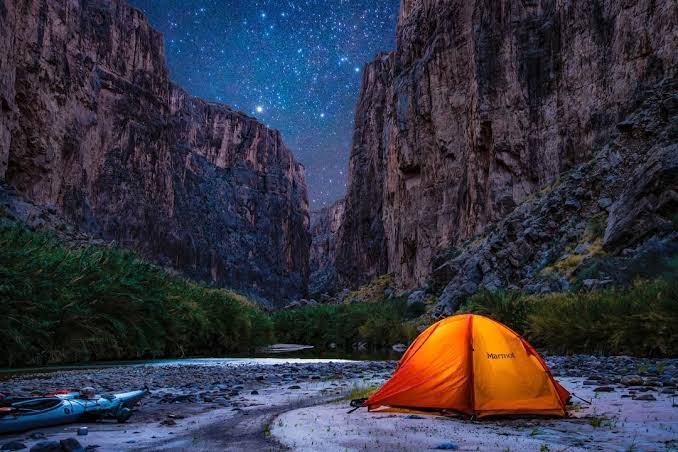
Planning a trip to Big Bend National Park means stepping into one of the most extraordinary landscapes in the United States, where vast desert scenery, rugged mountains, dark skies, and the winding Rio Grande come together in a destination that rewards thoughtful planning.
Fact-Checked By Maya Whitfield, Senior Travel Editor at WakaAbuja
Big Bend National Park is a remote, 801,000-acre desert and mountain park in Far West Texas that requires far more planning than most first-timers expect. You need at least two full days to see the three main districts; cell service is essentially nonexistent, and the nearest major airport is three to four hours away. The park is best visited from October through April when temperatures are survivable for hiking.
I drove into Big Bend for the first time after midnight, running on gas station coffee and a vague idea that the park was “somewhere near the border.” My phone had died an hour earlier. The road was empty, the sky was impossibly black, and I had no idea that my lodge was still 90 minutes away. That drive taught me more about this park than any brochure. Big Bend is not a place you stumble into. It is a place you deliberately plan for, and the planning is what most people get wrong.
Jump to: How Many Days | Real Costs | The Three Districts | First-Timer Mistakes | FAQs
Key takeaways
- Big Bend is huge and disjointed. The Chisos Basin, Rio Grande Village, and Santa Elena Canyon areas are 45 to 90 minutes apart by car.
- Cell service is mostly a myth. Download offline maps and tell someone your plan before you enter the park.
- Summer is dangerous. Temperatures regularly exceed 100°F in the desert and river areas. Hike at dawn or not at all.
- Fuel up in Study Butte, Marathon, or Alpine. There is gas near the park entrance, but it is expensive and can run out during busy weeks.
- This is not a one-day park. A single day only scratches one district. Two full days is the realistic minimum.
- Do not confuse it with Big Bend Ranch State Park. They are adjacent but entirely different experiences, which I explain below.
How many days do you actually need at Big Bend National Park?
The honest answer is two full days minimum, and three to four if you want to hike more than one major trail and see all three districts. The park is shaped like a lopsided triangle, and the drive from one corner to another eats real time. I once tried to do Santa Elena Canyon in the morning and the Chisos Basin in the afternoon. It worked, but I spent more time in the car than on my feet.
One day: only if you must
- Pick one district: Chisos Basin or Santa Elena
- Drive the Ross Maxwell Scenic Drive
- Short walk on the Window View Trail
- Accept that you will miss most of the park
Two to three days: the sweet spot
- Day 1: Chisos Basin trails and sunset from the Window
- Day 2: Santa Elena Canyon and Ross Maxwell Drive
- Optional Day 3: Rio Grande Village, hot springs, and birding
A full week: for hikers and solitude
- Backcountry permits for the Chisos Mountains
- River trips or multi-day backpacking
- Day trip to Big Bend Ranch State Park
- Time to sit and watch the stars without rushing
When is the best time to visit Big Bend National Park?
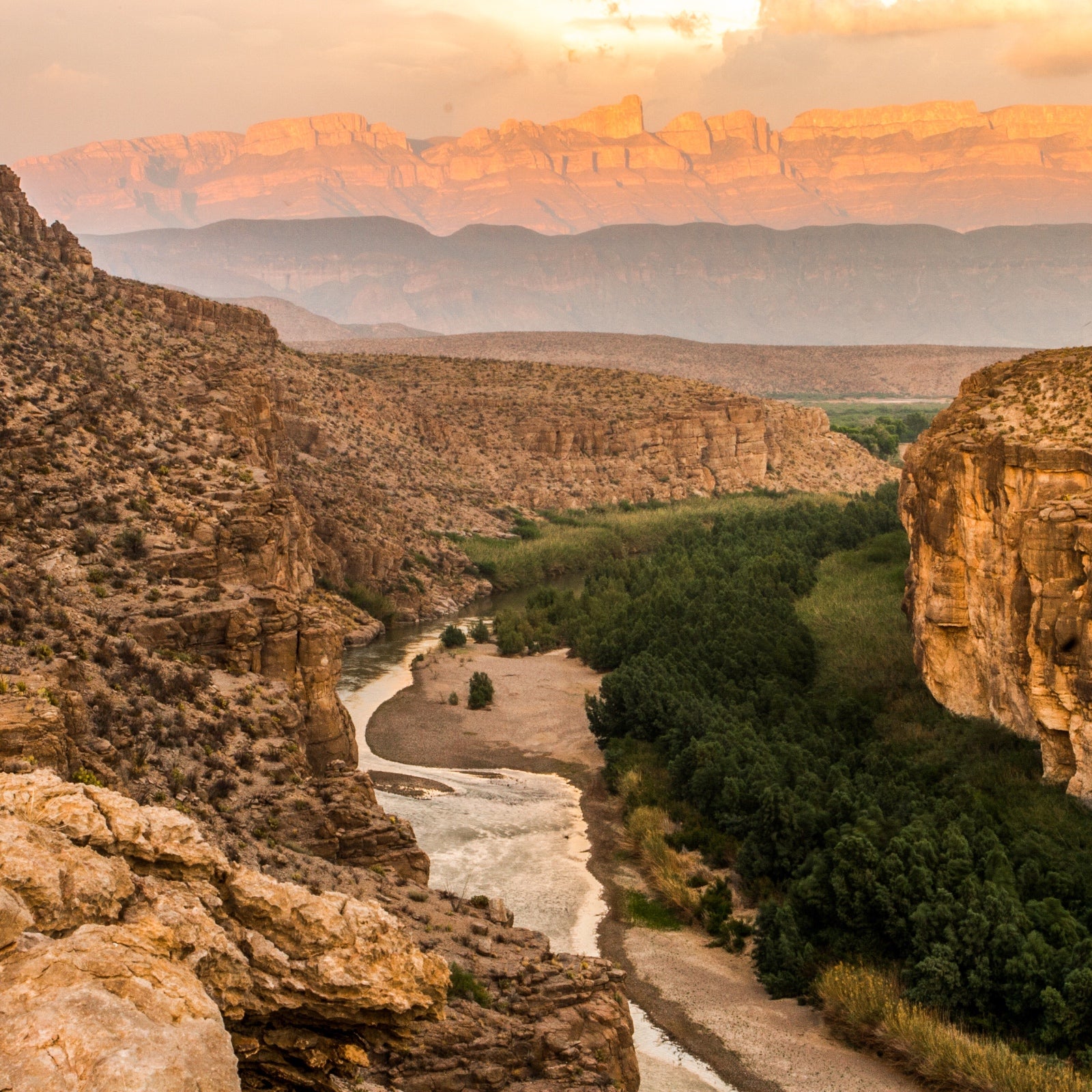
October through April is the same window. November to February gives you cool mornings, mild afternoons, and the best hiking conditions. March brings spring break crowds and wind. May through September is a furnace. I made the mistake of hiking the Santa Elena Canyon trail in late May once. The canyon walls blocked the breeze, the humidity from the river turned the air into a sauna, and I drained two liters of water before noon.
Summer is not just uncomfortable. It is genuinely dangerous. The National Park Service consistently warns that daytime highs in the Rio Grande Village and desert lowlands exceed 100°F for weeks at a time. If you go in summer, hike only at dawn, carry at least a gallon of water per person per day, and treat noon to 5 p.m. as an indoor or in-car rest window.
Maya Whitfield’s honest take: “If you only remember one thing from this entire guide, make it this: Big Bend in July is not a vacation; it is a survival exercise. I have seen seasoned hikers turn around halfway up the Lost Mine Trail because the heat simply beat them.”
How do you actually get to Big Bend National Park, and why are the distances so deceptive?
Big Bend is in Brewster County, Texas, and it is deliberately far from everything. The nearest major airport is Midland International Air and Space Port, about a three-hour drive. El Paso is four hours. San Antonio is over five. Austin is closer to six. I have met people who flew into Houston thinking they would “swing by” Big Bend. That is an eight-hour drive. Do not be that person.
Once you are inside the park, the distances between the three main areas are just as surprising. The drive from the Chisos Basin Visitor Center to Rio Grande Village is about 45 minutes without stops. From Chisos Basin to Santa Elena Canyon via the Ross Maxwell Scenic Drive is another hour. You are not covering this park in a hurry.
Fuel and supplies: the non-negotiable stops
Fill your tank in Alpine, Marathon, or Study Butte before you enter. There is a gas station near the park entrance, but it is expensive and has run dry during peak visitation. There is no fuel inside the park. Carry more water than you think you need, and do not count on your phone’s GPS. Download offline maps before you leave civilization. The park’s official NPS page has current alerts, and I check it every single time before I drive in.
What does it actually cost to visit Big Bend National Park?
The entrance fee is a flat $30 per private vehicle for a seven-day pass, which is one of the better bargains in the national park system. Motorcycles pay $25, and individuals on foot or bicycle pay $15. The annual America the Beautiful pass covers entry and is worth it if you visit more than three federal sites in a year.
Lodging: the range is wide
Inside the park, the Chisos Mountains Lodge is the only hotel. Rooms typically run $150 to $250 per night and book out months in advance. Outside the park, Study Butte and Terlingua have motels, casitas, and Airbnb-style rentals from $100 to $400 per night. I have stayed in a $120 Terlingua casita and a $220 lodge room, and both were fine. What you pay for is proximity and air conditioning, not luxury.
Camping and backcountry
Developed campgrounds cost $16 to $25 per night depending on the site and season. Backcountry permits are $12 per night. If you want a backcountry site in the Chisos Mountains during spring break or Thanksgiving week, reserve it the day permits open. I have watched people show up in March expecting a walk-up site and leave with nothing.
For lodging outside the park, I compare prices on Booking.com and then call the property directly to ask about weekly rates. For vacation rentals in Terlingua, Vrbo has the most consistent inventory for the area.
What are the three districts of Big Bend, and which one should you prioritize?

Big Bend is not a single place you can “see” in a loop. It is three separate regions connected by long, slow roads. Understanding this before you arrive saves you from the classic mistake of driving back and forth across the park every day.
Chisos Basin
- Highest elevation, coolest temperatures
- Best hiking: Lost Mine, Window, South Rim
- Only in-park lodge and main visitor center
- Sunset from the Window View Trail is mandatory
Rio Grande Village
- Lowest elevation, hottest area
- River access, hot springs, birding
- Best winter camping and warm-weather escape
- Drive here for sunrise over the river
Castolon and Santa Elena
- Most iconic canyon in the park
- Ross Maxwell Scenic Drive leads here
- Best for river views and geology
- The historic Castolon district has limited services
If you only have one full day, choose Chisos Basin. If you have two, add Santa Elena. Rio Grande Village is wonderful, but it is the hardest to reach and the hottest, so it often gets cut when time is short.
Big Bend National Park vs. Big Bend Ranch State Park: What is the difference?
This confusion is constant, and even the official NPS page does not address it directly. Big Bend National Park is the federal land with paved scenic drives, a lodge, developed campgrounds, and the Chisos Mountains. Big Bend Ranch State Park is a separate, wilder, rougher property managed by Texas Parks and Wildlife, located to the west along the Rio Grande. It has almost no services, mostly rough dirt roads, and a more rugged backcountry feel.
I have done both. The national park is the better choice for first-timers. The state park is better for experienced desert explorers, mountain bikers, and people who want total solitude. Do not try to see both in the same trip unless you have at least four or five days.
What mistakes do first-time visitors make at Big Bend?
I have made several of these myself, and I have watched others make the rest. None of them are fatal, but all of them waste time, money, or comfort.
1. Underestimating the driving distances
The park is 801,000 acres. The drive from one district to another is not a quick hop. Plan your days around staying in one region rather than crisscrossing the park.
2. Assuming your phone will work
Cell service is essentially nonexistent in most of the park. Download offline maps, save your lodging confirmation, and tell someone at home your plan. Do not count on being able to call for help.
3. Visiting in summer without a heat plan
People die from heat in Big Bend. It happens. Check the NPS heat advisory before you hike, carry a gallon of water per person, and turn around when you are halfway through your water, not when it is empty.
4. Skipping the Chisos Basin because you think it is “too popular”
Yes, it is the busiest part of the park. It is also the most beautiful and the most comfortable. You are not too cool for it. Go.
5. Not booking lodging far enough in advance
In-park lodging and the best Terlingua rentals book out months ahead for spring break, Thanksgiving, and Christmas weeks. Book early or plan to camp.
6. Trying to see everything in one day
You will spend the entire day driving and feel like you saw nothing. Pick one district and do it well.
Frequently asked questions about Big Bend National Park
Is Big Bend National Park worth the drive?
Yes, if you want solitude, dramatic desert scenery, and excellent hiking without the crowds of parks like Zion or Yosemite. The drive is long and remote, but that isolation is part of the appeal. If you want convenience and amenities, this is not the park for you.
What is the closest major city to Big Bend National Park?
The closest major city is El Paso, about four hours by car. Midland-Odessa is slightly closer to the northeast entrance but is a smaller air market. Alpine and Marfa are the closest small towns with character, but they are still an hour to 90 minutes from the park entrance.
Can you do Big Bend as a day trip from El Paso or Midland?
Technically yes, but it is a brutal day. You would spend six to eight hours driving round trip, leaving only a few hours for the park. I have done it once and do not recommend it. Stay at least one night in Study Butte, Terlingua, or inside the park.
Is there cell phone service in Big Bend National Park?
No, not reliably. Some high points in the Chisos Basin get a weak signal, and a few spots near the park entrance have coverage, but do not plan on it. Download offline maps and inform someone of your itinerary before you enter.
Do you need a 4×4 for Big Bend National Park?
For the main paved roads and developed areas, no. A standard 2WD car handles the Ross Maxwell Scenic Drive, the road to Chisos Basin, and the pavement to Rio Grande Village. If you want to explore backcountry dirt roads like Old Maverick Road or River Road, you need high clearance and often 4×4.
How far is Big Bend National Park from Austin, Houston, or San Antonio?
Austin is roughly six hours by car. Houston is eight. San Antonio is five and a half to six hours. None of these are realistic day trips. Plan on a full travel day on each end of your Big Bend visit.
Is Big Bend safe for solo travelers?
Yes, with the right preparation. The main risks are heat, dehydration, and getting lost without cell service, not crime. Carry plenty of water, hike early, and stick to marked trails if you are alone. Let someone know where you are going and when you expect to return.
Plan your trip: booking platforms we trust
For a park this remote, I use a mix of platforms depending on what I am booking. For the Chisos Mountains Lodge or Terlingua motels, I check Booking.com first because the cancellation policies are clear and the review volume is high. For vacation rentals and casitas around Study Butte, Vrbo has the best local inventory. For flights into Midland or El Paso, Kayak is my default for comparing fares and rental car bundles.
WakaAbuja does its best to keep all information accurate at the time of publishing. Prices, policies, and availability change regularly. Always verify with official sources before you travel. We are not liable for errors caused by outdated information. Travel insurance is strongly recommended.