advertisement
Travel to Cartagena, Colombia: A Verified, No-Nonsense Guide to the Walled City and Beyond
Fact-Checked By: Maya Whitfield—Senior Travel Editor at WakaAbuja
Travel to Cartagena, Colombia, centers on the UNESCO-listed Walled City, with the Castillo San Felipe fortress and the street-art neighborhood of Getsemaní as essential stops. U.S. citizens need only a valid passport, and a mid-range daily budget runs roughly $69 USD (confirm the current exchange rate before you travel). The dry season from December to April is the most comfortable window, though Cartagena is a year-round destination.
I have walked through the Clock Tower gate more times than I can count, and the heat still hits me like a wall every single time. That is not a complaint. It is a warning. Cartagena rewards people who plan around the sun, who carry small bills, and who know the difference between the Walled City at 9 a.m. and the Walled City at noon. This guide is built to make you one of those people.
Jump to: Entry requirements | Getting around | Things to do | Where to stay | What to eat | Packing | Safety | Budget | FAQ
Key takeaways
- U.S. citizens do not need a visa for stays under 90 days, but your passport must be valid for at least six months beyond your arrival date. You must also complete the free Check-Mig form within 72 hours of your flight.
- Budget travelers can manage on roughly $25 per day (confirm current rates), mid-range travelers should plan around $69 per day, and luxury travelers can expect $221 or more per day for accommodation, food, and activities.
- Use Uber instead of hailing taxis from the street. Cartagena taxi drivers do not use meters and have a well-documented habit of overcharging tourists.
- The Walled City and Bocagrande accept credit cards at established businesses. Bring cash for street food, beach vendors, taxis, and the Rosario Islands.
- The Castillo San Felipe de Barajas is the largest Spanish fortress ever built in South America. Go in the late afternoon when the heat breaks.
- Rosario Islands tours often exclude the national park fee of about $6 to $7 USD (confirm with your operator) and the boat leaves by 11 a.m. before crowds arrive.
- Getsemaní has transformed from a rough neighborhood into Cartagena’s most interesting dining and nightlife district. It is where locals and travelers actually mix.
Do you need a visa to travel to Cartagena, Colombia?
For most travelers from the United States, Canada, the United Kingdom, and the European Union, the answer is no. You can enter Colombia visa-free for tourism stays of up to 90 days. Your passport must be valid for a minimum of six months after your arrival date, so check that expiry date before you book anything.
There is one extra step that catches people off guard. Colombia requires all travelers to complete the Check-Mig immigration form within 72 hours before both arrival and departure. It is free, it takes about ten minutes, and you do it through the official Migración Colombia website. Airlines sometimes ask for proof at check-in, so save the confirmation PDF to your phone.
On the health side, yellow fever vaccination is not required for entry to Cartagena or Bogotá, but it is recommended if you plan to visit rural or forested areas afterward. Colombia has experienced an ongoing yellow fever outbreak concentrated in rural regions since 2024, so check the latest guidance from your country’s health authority before you travel. If you are continuing to the Amazon or other jungle regions, the vaccine becomes much more important.
Travel insurance is not mandatory for entry, but I never go without it. A basic policy covering medical evacuation from a beach or island excursion costs very little compared to what a hospital bill in a foreign country can run. See our travel insurance guide for a full breakdown of what to look for.
Maya’s honest take: “Do not skip the Check-Mig form. I watched a family at Miami gate get turned away from boarding because they had not completed it. Ten minutes of admin saves you a very expensive rebooking.”
What about the airport transfer from CTG?
Rafael Núñez International Airport (CTG) sits about 15 minutes from the Walled City and 10 minutes from Bocagrande. Official yellow taxis are available outside arrivals, but you must agree on the fare before you get in. The going rate for a ride to the Walled City or Bocagrande is roughly 20,000 to 30,000 COP (about $5 to $8 USD, confirm the current rate with your driver). If a driver quotes you 50,000 COP or more, walk away and find another taxi or open the Uber app.
How do you get around Cartagena without getting overcharged?
Cartagena has no metro system, so your realistic options are walking, taxis, Uber, and boats for the islands. The good news is that the tourist core is compact. The Walled City and Getsemaní are entirely walkable, and you can cross from one to the other in under ten minutes.
Here is the rule I follow every single trip: Uber over street taxis. Uber works well in Cartagena, the pricing is set before you accept the ride, and you do not have to negotiate in Spanish while standing in the heat with your bags. Street taxis operate on a zone system with no meters, which means the price is whatever the driver decides it is when they see your face. I have been quoted 40,000 COP for a ride that Uber charged me 12,000 COP for ten minutes later.
For the islands, you will be taking a boat. Speedboats and ferries to the Rosario Islands and Playa Blanca depart from Muelle de la Bodeguita at the edge of the old town. The ride to Barú takes about 45 minutes to an hour. Transport alone typically runs $20 to $30 USD per person (confirm exactly what is included before you pay). The detail that surprises people is the hidden extras: a port departure tax, the national park fee of about $6 to $7 USD (collected at a floating checkpoint), and then chair rental, umbrella, and lunch on the island. Ask specifically what the price covers.
Best for
- Walking: Walled City, Getsemaní, Castillo San Felipe. Everything is close.
- Uber: Airport transfers, Bocagrande to Centro, late nights. Fixed pricing, no haggling.
- Boats: Rosario Islands, Playa Blanca, Barú. No road alternative exists.
- Transcaribe buses: Budget travelers comfortable with local transit. Requires a TuLlave card.
Worth considering
- Bicycle rental: Good for Bocagrande and Castillogrande beachfront in early morning or late afternoon. Not at noon.
- Chiva buses: These are party buses, not efficient transport. Fun for one night, not for sightseeing logistics.
- Horse carriages: Romantic in theory, expensive in practice, and there are legitimate animal welfare concerns. I skip them.
What are the best things to do in Cartagena?
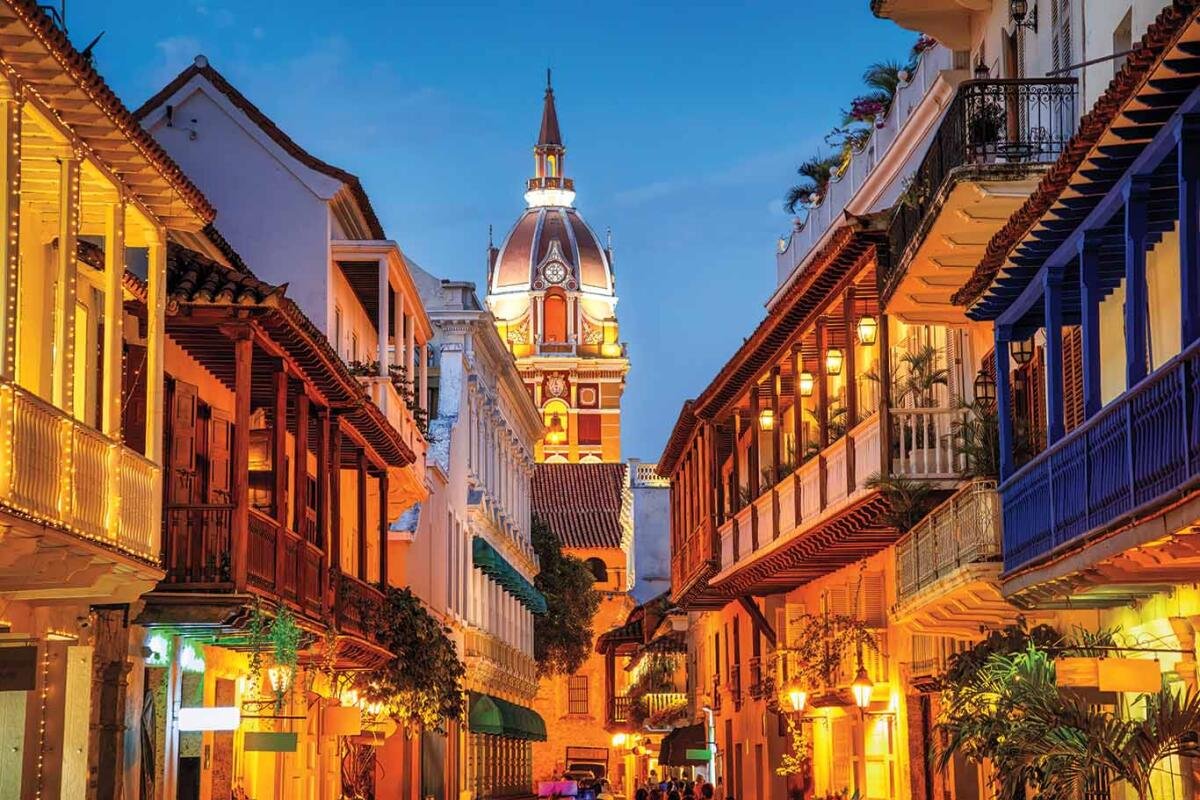
Cartagena works as three vacations layered into one city. The Walled City is a UNESCO World Heritage site with colonial architecture and flower-draped balconies. Bocagrande is a high-rise beach strip that locals half-jokingly call Cartagena’s Miami. And Getsemaní is the creative, street-art-covered neighborhood where the city actually lives after dark.
Start with the Walled City early in the morning. By 10 a.m., tour groups flood the cobblestone streets and the photo spots become a queue. Walk the top of the city wall at sunset instead. Enter near the Clock Tower, find the ramped entryway, and follow the wall toward San Diego. The light turns the stone orange and the Caribbean breeze finally makes the heat bearable.
Then go to Castillo San Felipe de Barajas. It is the largest fortress the Spanish ever built in South America. In 1741, a British fleet of roughly 180 ships and 27,000 men attacked. The Spanish commander, Blas de Lezo, defended it with a fraction of that force despite having already lost an eye, a leg, and the use of one arm. He won. The tunnels built into the fortress were designed to carry footsteps so guards could hear anyone approaching. Most are open to walk through. Go in the late afternoon.
Should you visit the Rosario Islands or Playa Blanca?
Everyone gets pitched a boat trip to the Rosario Islands. The water really is that shade of blue-green that looks fake in photos. Here is what nobody tells you upfront: by 11 a.m., fifteen or twenty boats converge on the same two stops, and the isolated paradise from the brochure becomes a few hundred people sharing a hundred meters of beach. The national park fee is about $6 to $7 USD (confirm with your tour operator).
For a quieter day, take a taxi or boat to Playa Blanca on Isla Barú instead. It is under two hours away and you set your own schedule. Playa Blanca has its own crowds and persistent vendors, but you can walk past the main strip and find a calmer stretch of sand.
If you want to book a boat tour with transparent pricing, GetYourGuide lays out exactly what is included, what time you leave, and how many hours you actually get on the island. That transparency matters here more than almost anywhere.
What is there to do in Getsemaní?
Getsemaní sits just outside the Walled City walls. It spent most of the 20th century as the rough part of town and the last fifteen years rebranding itself through street art, independent cafés, and restaurants. Michelin-listed kitchens share sidewalks with arepa carts. The plazas stay full past midnight. It feels less like a museum and more like a neighborhood where people actually live.
Café Havana draws a live salsa band most nights and a crowd that ends up dancing with strangers. The cocktail bars along Calle de la Media Luna and around Plaza de la Trinidad are worth an evening on their own. This is where you go when you want Cartagena to feel less curated and more real.
Where should you stay in Cartagena?
Your choice of neighborhood changes your entire trip. The Walled City puts you inside the postcard but you pay for it and the streets get loud. Bocagrande gives you beach access and modern hotels but feels more like Miami than Colombia. Getsemaní is the middle ground: cheaper than the Centro, more character than Bocagrande, and a five-minute walk to the Clock Tower.
For specific hotel picks, I lean on properties with proven track records rather than chasing the newest boutique opening. Hotel Caribe by Faranda Grand in Bocagrande consistently rates well for its beachfront location and amenities. The Hilton Cartagena is a reliable choice if you want a familiar brand with a pool and beach access. Inside the walls, Sofitel Legend Santa Clara occupies a converted 17th-century convent and is the splurge option if you want to sleep inside living history.
Best for
- Walled City: First-timers who want the full Cartagena experience. Walk to everything. Accept the noise and higher prices.
- Getsemaní: Travelers who want local energy, street art, and better restaurant value. Hostels and boutique hotels mix freely here.
- Bocagrande: Beach-focused travelers, families, and anyone who wants a pool and a high-rise view. Ten minutes by Uber to the Centro.
Worth considering
- Manga: Quieter residential area near the convention center. Good apartment rentals and easy access to the Centro.
- Castillogrande: The calmest beach area, mostly local families. Fewer hotels but excellent for longer stays.
For booking, Booking.com has the widest inventory for Cartagena hotels and hostels. If you are traveling with a family or a group and want a kitchen and living space, Vrbo has solid vacation rental options in Bocagrande and Manga. For loyalty points and member rates, Hotels.com is worth checking. For broad hotel category inspiration and neighborhood guides, see our hotels category.
What should you eat in Cartagena?
Cartagena’s food scene has exploded in the last decade, but the foundation is still Caribbean coast cooking: fish, coconut rice, plantains, and ceviche. You can eat extremely well here for very little money, or you can spend a hundred dollars on a tasting menu. Both are valid.
The restaurant that put Cartagena’s modern cuisine on the map is Celele, tucked into a small blue house on Calle del Espíritu Santo in Getsemaní. Chef Jaime Rodríguez spent years researching Colombian Caribbean biodiversity before opening. The kitchen works with ingredients you will not find on menus elsewhere: Caribbean flower salad, confit pork terrine, fish salpicón with yam and coconut béchamel. Celele won the Sustainable Restaurant Award in 2025 and has ranked on Latin America’s 50 Best Restaurants list. Book ahead. This is not a walk-in situation.
For something more relaxed and equally memorable, Buena Vida Marisquería in the Centro serves excellent seafood across three floors with a rooftop terrace. The cazuela levanta muertos soup is a meal in itself. For street food, arepas, empanadas, and fresh ceviche from vendors in Getsemaní and around the Bazurto Market will cost you a few thousand pesos and taste like the city.
Maya’s honest take: “Order the limonada de coco everywhere you go. It is frozen coconut limeade and it is the only thing that makes the afternoon heat negotiable. The best version I have had was on a rooftop in the Centro, but honestly, they are all good.”
For restaurant research and reviews beyond the obvious tourist spots, TripAdvisor is useful for filtering by neighborhood and recent ratings. Just read the reviews from the last three months, not the ones from 2019.
What should you pack for Cartagena?
Cartagena is hot and humid almost year-round. Daytime temperatures sit between 30 and 32 degrees Celsius, with humidity around 75 to 80 percent. The “feels like” temperature regularly reaches close to 40 degrees Celsius. Pack accordingly.
Lightweight, breathable clothing is not a suggestion, it is survival. Linen and cotton work well. Bring a hat and sunglasses. Comfortable walking shoes matter because the Walled City streets are cobblestone and uneven. Bring a small umbrella or rain jacket if you are visiting between May and November, which is the rainy season, though rain usually comes in short heavy bursts rather than all-day drizzle.
For connectivity, Colombia uses the same plug types as the United States (Type A and B), so most North American travelers do not need an adapter. The voltage is 110V, same as the U.S. If you are coming from Europe or the UK, bring a converter. Wi-Fi is reliable in hotels, cafés, and most restaurants in tourist areas. For mobile data, an eSIM is the easiest option. You can buy a local SIM at the airport or in the city, but an eSIM activated before you land saves you the queue and the paperwork.
Best for
- Lightweight linen shirts: Breathe, dry fast, look presentable at dinner.
- Comfortable sandals with grip: Cobblestones are slippery when wet.
- Reef-safe sunscreen: You will burn faster than you think.
- Small crossbody bag: Keeps your phone and cash secure in crowds.
Worth considering
- Insect repellent: Mosquitoes are present, especially near water and in the evenings.
- Refillable water bottle: Tap water is not safe to drink. Buy large bottles from shops and refill.
- Light rain shell: Essential if you visit during the rainy season.
Is Cartagena safe for tourists?
Cartagena is broadly safe for tourists who use common sense. The Walled City, Bocagrande, and the busy parts of Getsemaní are well-lit, heavily trafficked, and patrolled. Thousands of visitors walk those streets every night without incident. The city has undergone a remarkable transformation over the past fifteen years and the tourist core reflects that.
That said, petty theft and overcharging are real issues. The most common problems reported by visitors involve inflated taxi fares, street vendors demanding payment for unsolicited services, and pickpocketing in crowded areas. The Bolívar police and the local government have even launched an app called CÍVIK to provide official taxi rates and tourist information, which tells you how persistent the overcharging problem has been.
My practical safety rules for Cartagena are these. Use Uber instead of street taxis. Do not wear flashy jewelry or carry large amounts of cash. Keep your phone in a front pocket or a zipped bag in crowds. Politely decline unsolicited offers of massages, photos, or performances, or agree on a price first if you actually want them. Do not walk through the Matuna area between Getsemaní and the Walled City late at night, and avoid dark empty side streets on the edges of Getsemaní after dark. Carry a photocopy of your passport rather than the original, which should stay in your hotel safe.
For official travel advisories specific to your home country, check your government’s foreign travel advice page before you go. Conditions can change, and it is always better to have current information than to rely on a blog post from six months ago.
How much does a trip to Cartagena cost?
Cartagena is one of the more affordable Caribbean destinations, but prices swing wildly depending on where you eat, sleep, and drink. The estimates below are drawn from current budgeting data and should give you a working framework (confirm current exchange rates before you finalize your budget).
Budget (Cheap)
$25 per day (confirm current rates)
Hostels, street food, local buses, and free walking tours. Perfectly doable if you are comfortable with basic accommodation and eating where locals eat.
Mid-range
$69 per day (confirm current rates)
Three-star hotels or nice Airbnbs, sit-down restaurants, Uber for transport, and one or two paid activities. This is where most travelers land.
High-end (Luxury)
$221 per day (confirm current rates)
Boutique hotels inside the walls, fine dining at Celele and similar, private tours, and boat charters. Cartagena has a genuine luxury tier and it delivers.
Cash vs. card: what works where?
Credit cards are widely accepted at hotels, upscale restaurants in the Walled City and Bocagrande, and established shops. Visa is more widely accepted than Mastercard, though both work at most places. The cash economy is everywhere else: street food vendors, beach chair rentals, taxis, small bars in Getsemaní, and anything on the Rosario Islands. Carry 100,000 to 200,000 COP (about $24 to $48 USD, confirm current rates) in small bills and you will be covered.
ATMs are available but use the ones inside malls or bank branches rather than standalone machines on the street. The ATM fee is around 15,000 to 18,000 COP per withdrawal (confirm the current fee with your bank), and withdrawal limits are usually 600,000 to 800,000 COP per transaction. Take out larger amounts less often to minimize fees.
What should you avoid in Cartagena?
Most Cartagena horror stories come down to the same handful of avoidable mistakes. Here are the ones I see travelers make over and over.
Hailing taxis from the street
Cartagena taxis do not have meters. The driver sets the price based on how much they think you will pay. Tourists pay more, sometimes two or three times more. Use Uber or Cabify instead. If you must take a taxi, agree on the price before you get in and walk away if it sounds unreasonable.
Accepting unsolicited services
A street performer starts rapping at your table. A woman offers you a shoulder massage. A Palenquera poses for a photo with you. None of these are free. If you want the experience, agree on a price first. If you do not, say “No, gracias, no quiero” and keep walking. The same goes for unofficial tour guides and anyone offering to help you with your bags at the airport.
Assuming the Rosario Islands tour includes everything
The headline price for island tours often covers boat transport only. The national park fee, lunch, snorkel gear, beach chairs, and umbrellas are frequently extras. Ask specifically what is included before you pay. I have watched people get genuinely angry on the dock because nobody told them about the park fee.
Carrying large amounts of cash
Cash is necessary in Cartagena, but carrying 500,000 COP in your pocket makes you a target. Carry what you need for the day and leave the rest in your hotel safe. Use ATMs inside malls or banks, not on the street, and never at night.
Walking dark side streets at night
The tourist core is well-lit and busy. The edges of Getsemaní and the Matuna area between Getsemaní and the Walled City are not. Stick to the main streets and plazas after dark. If you are unsure about a route, take an Uber even if it is a five-minute walk.
Forgetting the heat
Cartagena’s midday heat is no joke. The “feels like” temperature regularly hits 40 degrees Celsius. Plan outdoor sightseeing for early morning or late afternoon. Drink water constantly. Wear a hat. Take a siesta during the hottest hours like the locals do.
Frequently asked questions about Cartagena travel
How many days do you need in Cartagena?
Three to four full days is enough to see the Walled City, Getsemaní, Castillo San Felipe, and take one island day trip. Five days lets you slow down, add a cooking class, and actually enjoy the beach without rushing. If you only have a long weekend, focus on the Walled City and Getsemaní and save the islands for next time.
Is Cartagena expensive compared to other Caribbean destinations?
No. Cartagena is reasonably affordable by Caribbean standards. Budget travelers can manage on around $25 per day (confirm current rates), mid-range travelers spend around $69 per day, and luxury travelers can spend $221 or more. The main costs that add up are island tours and upscale dining in the Walled City.
Do I need cash in Cartagena or can I use cards everywhere?
You need both. Cards work at hotels, established restaurants in the Walled City and Bocagrande, and larger shops. Cash is required for street food, taxis, beach vendors, small bars in Getsemaní, and everything on the islands. Carry 100,000 to 200,000 COP (about $24 to $48 USD, confirm current rates) in small bills daily.
What is the best time of year to visit Cartagena?
The dry season from December to April offers the most reliable weather with less rain and lower humidity. That is also peak season, so expect higher hotel prices and more crowds. May through November is the rainy season, but rain usually comes in short heavy bursts rather than all-day washouts. If you want lower prices and do not mind occasional afternoon showers, the shoulder months are a good trade-off.
Can I drink the tap water in Cartagena?
No. Tap water is not recommended for drinking in Cartagena. Stick to bottled water, which is cheap and widely available. Most hotels and restaurants provide filtered water or ice made from purified water. Bring a refillable bottle and buy large bottles from local shops to reduce plastic waste.
Do I need a visa to travel to Cartagena from the U.S.?
No. U.S. citizens do not need a visa for tourist stays of up to 90 days in Colombia. Your passport must be valid for at least six months beyond your arrival date. You must also complete the free Check-Mig immigration form within 72 hours before both arrival and departure.
Is yellow fever vaccination required for Cartagena?
Yellow fever vaccination is not required for entry to Cartagena or Bogotá, but it is recommended if you plan to visit rural or forested areas afterward. Colombia has experienced an ongoing yellow fever outbreak concentrated in rural regions since 2024. Check your home country’s health authority for the latest guidance before you travel.
How do I get from Cartagena airport to the Walled City?
The airport (CTG) is about 15 minutes from the Walled City. Uber works well and gives you a fixed price before you accept. Official yellow taxis are also available, but you must agree on the fare first. Expect to pay around 20,000 to 30,000 COP (about $5 to $8 USD, confirm the current rate) for the trip. Do not accept quotes of 50,000 COP or more.
Plan your trip: booking platforms we trust
I have used all of these platforms personally across multiple trips, and they earn a spot here because they solve a specific problem well, not because they pay the highest commission. For Cartagena specifically, the difference between a smooth trip and a frustrating one often comes down to whether your hotel and tours were booked through a platform with clear cancellation policies and real reviews.
Booking.com
Widest hotel and hostel inventory in Cartagena with verified guest reviews.
GetYourGuide
Best for Rosario Islands boat tours and city walking tours with transparent inclusions.
Vrbo
Vacation rentals in Bocagrande and Manga for families and groups who want a kitchen.
Kayak
Flight price comparison for routes into Cartagena (CTG). Set alerts and watch prices.
Expedia
Flight and hotel packages for travelers who want to bundle and save.
TripAdvisor
Restaurant reviews and attraction rankings. Filter by recent reviews only.
For more travel planning resources, see our travel planning category and our guide to finding cheap flights. If you need visa guidance for other destinations, visit our visa category. For more things to do in destinations worldwide, browse our attractions category.
WakaAbuja does its best to keep all information accurate at the time of publishing. Prices, policies, and availability change regularly. Always verify with official sources before you travel. We are not liable for errors caused by outdated information. Travel insurance is strongly recommended.