
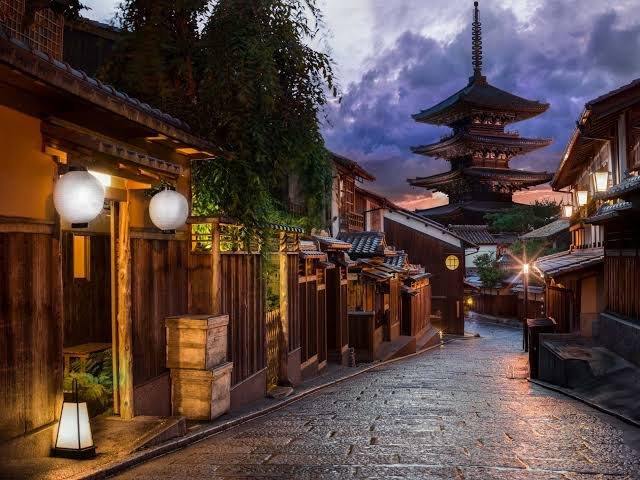
A Traditional Street in Kyoto, Japan: 7 Real Streets Worth Walking, With a Map and Visiting Tips
The most famous traditional street in Kyoto is Hanamikoji in the Gion geisha district, but at least seven streets are worth walking, including Pontocho, Ninenzaka, Sannenzaka, Ishibei-koji, Shirakawa-dori, and the lanes around Yasaka Shrine. Go before 9am for the quiet version, and remember that photographing geisha in Gion is restricted in several lanes, with fines of up to 10,000 yen for violations after the 2019 ordinance (confirm current rules on the Kyoto City official site).
Most guides to Kyoto’s traditional streets stop at Gion. They mention wooden machiya houses, lanterns, and geisha, then send you into the same three lanes as everyone else. I have walked these streets at dawn and at midnight, in sakura season and in the dead of February, and the difference between a good walk and a wasted afternoon is which street you pick and when you arrive.
This guide names seven real streets, tells you what each one is best for, and includes a proper map so you can link them into one walk.
Jump to: The map | The 7 streets | Geisha photo etiquette | Best time to go | Mistakes to avoid | FAQ
Key takeaways
- Hanamikoji is the most photographed traditional street in Kyoto, but it is also the most crowded. Arrive before 9am.
- Gion’s private lanes have been closed to tourists since 2019, with fines of up to 10,000 yen for entering without permission (confirm current signage on site).
- Ninenzaka and Sannenzaka are the two stone-paved slopes leading up to Kiyomizu-dera, and they are best at sunset.
- Pontocho is a narrow alley of restaurants that opens at dusk. Most establishments require reservations, especially Friday and Saturday.
- Ishibei-koji is a single preserved lane that is off-limits to photography on some stretches. Check the posted signs.
- The Kyoto City tourism site is the authoritative source for current restrictions and etiquette rules, so check it before you go.
Where are Kyoto’s traditional streets on the map?
All seven streets sit within a two-kilometer radius east of the Kamo River, and you can walk the full loop in half a day if you do not stop for lunch. The cluster runs from Pontocho in the west, north through Gion, and then east up the Higashiyama slopes toward Kiyomizu-dera. The official Kyoto City tourism site has a downloadable walking map for the Higashiyama area, and Google Maps handles the pin-by-pin navigation if you search each street name directly.
The walking order I use: start at Pontocho for lunch or an early coffee, cross Shijo-dori into Hanamikoji, walk north to Shirakawa-dori, loop east to Ishibei-koji, and finish with Ninenzaka and Sannenzaka at sunset. That order keeps the sun behind you in the afternoon and puts you on the slopes when the light is best.
Which traditional streets in Kyoto are actually worth walking?
1. Hanamikoji, Gion
The most famous street in Kyoto and the one that appears in every guide. It runs north from Shijo-dori through Gion, lined with teahouses, restaurants, and wooden machiya houses. Go before 9am if you want photographs without a crowd in the frame. Photography in the private lanes off Hanamikoji is restricted, and signs mark the limits clearly.
2. Shirakawa-dori
A quieter alternative to Hanamikoji, running along a small canal lined with willow trees and stone bridges. This is the street I recommend to anyone who wants the Gion atmosphere without the crowd. Best in late afternoon, when the light hits the willows.
3. Pontocho
A single-file alley of restaurants and teahouses that runs parallel to the Kamo River between Shijo and Sanjo. It is the most atmospheric dinner street in Kyoto, but most restaurants are reservation-only, and many are expensive. Walk it at dusk and pick a place with an English menu if you want a low-stakes meal.
4. Ninenzaka
A stone-paved slope leading up to Kiyomizu-dera, lined with shops and tea houses. It is crowded during the day but almost empty before 8am. The best photographs are at the top, looking back down the slope toward the pagoda at Hokan-ji.
5. Sannenzaka
The continuation of Ninenzaka, steeper and slightly quieter. The lane is lined with preserved wooden buildings, and the walk up toward Kiyomizu-dera is one of the best-preserved stretches in the city. Best at sunset, when the light turns the stone warm.
6. Ishibei-koji
A single preserved lane in Higashiyama that is often described as the most beautiful street in Kyoto. It is short, but the wooden facades and stone paving are intact in a way that most of the city is not. Note that some stretches prohibit photography, and the signs are clear.
7. The lanes around Yasaka Shrine
The small streets that ring Yasaka Shrine, particularly the ones south of Shijo-dori, have the same machiya architecture and lanterns as the famous streets but far fewer visitors. If Gion is too crowded, walk here instead.
Maya’s honest take: “If you only have one morning, walk Hanamikoji at 7am, then Shirakawa-dori. You will see more in two hours than most visitors see in a day.”
Best for photography
- Hanamikoji: arrival before 9am for empty frames
- Ninenzaka: the view back toward the Hokan-ji pagoda
- Shirakawa-dori: willows and canal in late afternoon light
Best for quiet walks
- Ishibei-koji: the preserved lane with clear signage
- Yasaka Shrine lanes: the alternative to Gion crowds
- Shirakawa-dori: the canal-side walk at any hour
What are the rules for photographing geisha in Kyoto?
This is the etiquette question people search for most, and the answer is more restrictive than most visitors expect. In 2019, Kyoto City introduced an ordinance banning photography of geisha and maiko in the private lanes of Gion, with fines of up to 10,000 yen for violations (confirm current signage and rules on the Kyoto City official site). The rules apply only to the private lanes, but the signage is clear and the fines are real.
Public streets like Hanamikoji itself are technically open to photography, but chasing a geisha down the street for a photo is considered disrespectful and can result in a request to stop. If you want to see geisha and maiko, book a performance or a dinner at an ochaya through a legitimate operator rather than trying to photograph them on the street. The Kyoto City tourism site and the Gion Preservation Association both publish the current rules, and they are the authoritative source if signage at the location is unclear.
Maya’s honest take: “If you have to chase the photo, put the camera down. The image you get will not be worth the interaction, and the locals will remember it.”
When is the best time to walk Kyoto’s traditional streets?
Early morning is the answer for every street on this list. Before 9am, Hanamikoji, Ninenzaka, and Sannenzaka are quiet enough to photograph without a crowd in the frame. The light is soft, the shops are still closed, and you can hear the street instead of the tour groups. Late afternoon and sunset are the second-best window, especially on the Higashiyama slopes.
Season matters too. Late March to early April is Sakura season and the busiest time of year in Kyoto, with hotel rates climbing 50 to 100 percent above the winter baseline (confirm current rates on Booking.com). Mid-to-late November is the autumn leaves season and similarly crowded. February and early June are quieter, cheaper, and still beautiful, with fewer tourists and more of the city to yourself.
What do first-time visitors get wrong on Kyoto’s traditional streets?
Going at midday. The lanes are packed between 10am and 4pm, and the photographs you saw online were taken at dawn. If you sleep in, you will see the back of someone’s head for three hours.
Photographing geisha in restricted lanes. The 2019 ordinance carries fines of up to 10,000 yen, and the signage is clear (confirm current rules on the Kyoto City site). Do not ignore it.
Eating on the street. Kyoto has a strict no-eating-while-walking norm on many traditional streets, especially in Gion and Higashiyama. Finish your snack at the shop or at a bench.
Wearing heels or smooth-soled shoes. Ninenzaka and Sannenzaka are stone-paved slopes, and they are slippery when wet. Flat shoes with grip are the correct choice.
Assuming every wooden building is centuries old. Many are reconstructions, and some are modern builds designed to look traditional. The atmosphere is real, but the history is mixed.
Missing the quiet alternatives. Hanamikoji and Pontocho absorb the crowds. Shirakawa-dori, Ishibei-koji, and the lanes around Yasaka Shrine give you the same architecture without the crush.
Frequently asked questions
What is the most traditional street in Kyoto?
Hanamikoji in Gion is the most famous traditional street in Kyoto, but Ishibei-koji in Higashiyama is often considered the most intact preserved lane. Both have machiya houses and stone paving, and Hanamikoji has more teahouses and restaurants. Go before 9am to see it without crowds.
Can you take photos of geisha in Kyoto?
Public streets like Hanamikoji are technically open to photography, but the private lanes of Gion have been closed to photography of geisha and maiko since 2019, with fines of up to 10,000 yen for violations (confirm current rules on the Kyoto City site). Chasing a geisha for a photo is considered disrespectful even on public streets. Book a performance or dinner if you want to see them properly.
How long does it take to walk Kyoto’s traditional streets?
The full loop from Pontocho through Gion and up to Kiyomizu-dera is about 3 to 4 kilometers and takes roughly half a day if you stop for photos and tea. If you only want Gion, Hanamikoji and Shirakawa-dori are an hour on foot. Give the Higashiyama slopes another hour to walk slowly.
What is the best time of day to visit Hanamikoji?
Before 9am is the best time to walk Hanamikoji, when the shops are closed and the street is quiet. Late afternoon, around 4pm, is the second-best window, with warm light and fewer visitors than midday. Avoid 10am to 3pm when the tour groups arrive.
Are Kyoto’s traditional streets free to visit?
Yes, the streets themselves are public and free to walk. You pay only for what you buy at shops or restaurants, and for entry to temples at the end of the streets, such as Kiyomizu-dera, which charges around 500 yen for adults (confirm the current fee on the official temple site). Most of the streets are open 24 hours.
What should you wear when walking Kyoto’s traditional streets?
Wear flat shoes with grip, especially for Ninenzaka and Sannenzaka, which are stone-paved slopes that get slippery when wet. Bring a light layer for mornings and evenings, even in summer. If you plan to visit temples, modest dress that covers shoulders and knees is respectful and sometimes required.
Plan your trip: booking platforms we trust
I use these platforms because they consistently surface useful inventory and clear pricing for Kyoto, and I have booked through most of them myself. The links below are affiliate links, which means WakaAbuja may earn a small commission if you book through them at no extra cost to you. Use the one that fits your trip, not all of them.
Booking.com
Best for hotels and machiya guesthouses near Gion and Higashiyama.
Agoda
Strong inventory for Kyoto hotels and ryokan, especially in Asia.
GetYourGuide
Guided walking tours of Gion and Higashiyama with local guides.
Expedia
Flight and hotel packages if you are combining Kyoto with Tokyo or Osaka.
Kayak
Compare flights into Osaka Kansai and Tokyo before you commit.
WakaAbuja does its best to keep all information accurate at the time of publishing. Prices, policies, and availability change regularly. Always verify with official sources before you travel. We are not liable for errors caused by outdated information. Travel insurance is strongly recommended.