advertisement
Train Routes in Europe: Where You Can Go, How Long It Takes, and How to Book It
Europe has one of the densest rail networks in the world, with more than 970 named routes across 38 countries. Most major city pairs connect in 2 to 5 hours: Paris to Amsterdam in about 3 hours 20 minutes, Madrid to Barcelona in 2 hours 30 minutes, Berlin to Prague in 4 hours, and Rome to Florence in 1 hour 30 minutes. On longer routes, night trains cover the distance while you sleep, with Paris to Vienna and Berlin to Stockholm among the most useful. Seat reservations are required on most high-speed and all-night trains, even when you hold a rail pass, and they are the single most common reason travelers get stuck at a station.
I have traveled by train through 14 European countries, and the thing that trips people up is never the network. It is the booking logic. Most guides show you a map and a handful of tourist routes, then push you toward buying a pass before you understand whether a pass is even the right choice.
This guide does it the other way around. First where you can go and how long it takes, then how to pay for it without overpaying.
Jump to: Route Times | Train Types | Pass vs. Tickets | Reservations | Night Trains | Mistakes | FAQ
Key takeaways
- Europe has more than 970 named train routes across 38 countries, with high-speed services covering most major city pairs in 2 to 5 hours.
- Seat reservations are mandatory on most high-speed trains, all night trains, and many cross-border services, even with a rail pass. Expect roughly 3 to 20 euros per reservation depending on the route (confirm current fees with the operator).
- Night trains are back in a real way, with new routes added across Austria, Germany, Sweden, and France. They save a hotel night and a travel day at once.
- A rail pass only pays off above roughly 8 to 12 travel days in a month (confirm current pass prices on the official Eurail site). Below that, point-to-point tickets usually win.
- Book high-speed routes 2 to 8 weeks ahead for the cheapest fares. Prices on the same route can triple closer to departure (check current fares on the operator site).
- Cross-border tickets are usually cheaper when bought from the operator of the country you are departing from, not a third-party reseller.
- Strikes and engineering works are common. Always check the operator site the day before you travel, not a month ahead.
How long does it take to travel between major European cities by train?
Here are the real travel times on the routes most travelers actually take, grouped by region. All times are for direct or single-connection high-speed services, not the slow regional alternatives. Verify current schedules on the operator site before you book, since timetables shift seasonally.
Western Europe
Paris to Amsterdam runs about 3 hours 20 minutes on Thalys. Paris to London is 2 hours 15 minutes on Eurostar. Paris to Brussels is 1 hour 25 minutes. Amsterdam to Brussels is 1 hour 50 minutes. Paris to Frankfurt is 3 hours 40 minutes on the direct ICE.
Southern Europe
Madrid to Barcelona is 2 hours 30 minutes on AVE. Madrid to Seville is 2 hours 30 minutes. Rome to Florence is 1 hour 30 minutes on Frecciarossa. Rome to Milan is 3 hours 10 minutes. Milan to Venice is 2 hours 25 minutes. Barcelona to Lyon is 5 hours on the direct TGV.
Central Europe
Berlin to Prague is 4 hours on the direct EuroCity. Berlin to Vienna is 7 hours 40 minutes daytime, or about 11 hours overnight. Munich to Vienna is 4 hours on Railjet. Vienna to Budapest is 2 hours 30 minutes. Prague to Vienna is 4 hours. Zurich to Milan is 3 hours 20 minutes through the Gotthard Base Tunnel, the longest and deepest rail tunnel on Earth at 57 kilometers.
Northern Europe
Copenhagen to Stockholm is 5 hours and 15 minutes. Stockholm to Oslo is 6 hours. Helsinki to St. Petersburg services are suspended and should not be planned. Oslo to Bergen is 6 hours 30 minutes on the Bergen Line, which is one of the most scenic routes in Europe.
Long-distance and cross-continental
Paris to Barcelona is 6 hours 30 minutes. Paris to Rome is 11 hours daytime, or about 14 hours overnight via Milan. Lisbon to Madrid is 10 hours, or a sleeper service. Istanbul to Sofia is about 8 hours, and onward connections into the rest of Europe are possible but slow.

Maya’s honest take: “The Zurich to Milan route through the Gotthard Base Tunnel is the one I tell everyone to take. You go under a mountain for 57 kilometers and come out in a different country, and the whole thing takes three hours. It never stops being strange and wonderful.”
What is the difference between high-speed, classic, and night trains in Europe?
This is the distinction that decides whether your trip is fast and expensive, slow and cheap, or a clever combination of both. Most guides blur it. Here it is clearly.
High-speed trains
These are the TGV in France, ICE in Germany, AVE in Spain, Frecciarossa in Italy, and Thalys and Eurostar for cross-border routes. They run at 250 to 320 kilometers per hour and cover long distances in hours rather than days. They also require seat reservations, which cost extra on top of any pass. Fares are dynamic, meaning the same seat costs more the closer you book.
Classic and regional trains
These are the slower intercity and regional services that stop more often and cost less. They usually do not require reservations, which makes them the flexible option if you are traveling without a fixed plan. They are also the best way to reach smaller towns and scenic routes that high-speed lines bypass.
Night trains
Night trains run overnight on long routes and let you sleep through the journey. The main operators are Nightjet in Austria and Germany, plus services run by SJ in Sweden and a growing number of French and Italian routes. You book a compartment rather than a seat, ranging from a reclining seat through couchettes to private sleeper cabins. They save a hotel night and a travel day at once, which is why they sell out early on popular routes.
Best for speed
- High-speed services between major cities
- Daytime travel under 5 hours
- Booking 2 to 8 weeks ahead for fares
Worth considering
- Night trains for routes over 8 hours
- Regional trains for flexibility and cost
- Scenic lines like Oslo to Bergen for the view
Is a rail pass cheaper than point-to-point tickets in Europe?
The honest answer is that it depends entirely on how many travel days you actually use, and most travelers overestimate that number. I have bought a pass I did not fully use, and I have bought individual tickets for a trip where a pass would have been cheaper. Here is the rule I now follow.
As a rough benchmark, an unlimited Eurail or Interrail pass becomes the better value once you pass roughly 8 to 12 travel days in a month (confirm current pass prices on the official Eurail site). Below that, point-to-point tickets almost always win, especially if you book early and you are not traveling on flexible dates.
Two things complicate the math. First, high-speed and night trains require seat reservations even with a pass, so a pass does not mean zero additional cost. Second, passes make more sense for spontaneous travel, where you cannot lock in cheap advance fares. If your itinerary is fixed and booked ahead, tickets win. If you want to wake up in a city and decide where to go next, the pass earns its price.
For most first-time travelers with a fixed route of 4 to 7 travel days, individual tickets booked in advance are cheaper. For longer trips with flexibility, a pass is usually simpler and often cheaper. If you want to compare fares before deciding, Kayak and the individual operator sites are the fastest route to real numbers.
Which European train routes require seat reservations?
This is where most travelers get caught out. A rail pass does not guarantee you a seat on every train. On many high-speed and cross-border routes, you must reserve a seat separately, and those reservations can sell out on popular dates.
Routes where reservations are mandatory
Eurostar between London and the continent requires a reservation, and it is expensive. Thalys and most TGV routes in France require one. AVE in Spain requires one. Frecciarossa in Italy requires one. Most international high-speed services require one, including Paris to Frankfurt and Zurich to Milan. All night trains require a compartment booking.
Routes where reservations are not required
Most regional and intercity trains in Germany, Switzerland, Austria, and the Netherlands do not require reservations. You can board with a pass or a ticket and find a seat. This is why Germany and Switzerland are the easiest countries to travel flexibly by rail.
What reservations cost?
Reservation fees vary widely. Domestic high-speed routes in Italy and France typically run 3 to 10 euros (confirm current fees with the operator). Cross-border routes like Eurostar and Thalys run higher, sometimes 15 to 30 euros (check current reservation fees on the operator site). Night train compartments cost more than a seat reservation because you are booking accommodation, not just a spot.
Book reservations as soon as your dates are fixed, especially in summer and around holidays. On some routes, reservations open only 90 days ahead, and the cheapest ones go first.
Are European night trains worth it?
Yes, on the right routes and with the right expectations. A night train is not a hotel. It is a moving bed that saves you a travel day and a hotel night at the same time. On routes over 8 hours, it is often the smartest option on the board.
The main operator is Nightjet, run by Austrian Federal Railways, with routes connecting Vienna, Munich, Zurich, Berlin, Venice, Rome, and Amsterdam. Sweden’s SJ runs Stockholm to Hamburg and other northern routes. France has rebuilt several overnight services, including Paris to Nice and Paris to Vienna.
The trade-off is comfort. A reclining seat is the cheapest option and the hardest to sleep in. Couchettes, which are shared compartments with four to six bunks, are the middle option. Private sleeper cabins are the most comfortable and the most expensive, often costing more than a budget flight plus a hotel. On a route like Paris to Vienna, a couchette lands in the same range as a cheap flight plus a night in a budget hotel (confirm current prices on the operator site), but it saves you the transfer time and the airport hassle.
Book night trains early. Popular routes and private cabins sell out weeks or months ahead, especially in summer.
What are the biggest mistakes people make planning European train routes?
I have made most of these, and I have watched other travelers make the rest at station ticket counters.
Assuming a rail pass means you can just board
On high-speed and night trains, it does not. You need a reservation, and you need it before the train fills. I once watched a traveler with a valid pass get turned away from a Thalys because every reservation was sold out.
Booking too late
Dynamic pricing means the same seat can cost three times more two days out than two months out (check current fares on the operator site). Book high-speed routes early.
Buying cross-border tickets from the wrong operator
For a Paris to Frankfurt ticket, buying from the German operator is often cheaper than a reseller, and buying from the French operator is sometimes cheaper still. Compare before you commit.
Ignoring strikes and engineering works
Strikes are common in France, Italy, and Belgium. Engineering works close lines on weekends. Check the operator site the day before you travel, not a month ahead, and have a bus or flight backup for critical connections.
Overpacking for a train trip
You will lift your own bag onto racks and carry it up station stairs. One carry-on-sized bag and a daypack is the right amount. Two large suitcases on a crowded Frecciarossa is a bad afternoon.
Planning too many cities in too few days
Trains are fast, but stations are not. Add 45 minutes on each end for transfers, security on high-speed routes, and finding the platform. Three cities in five days by train is a sprint, not a trip.
Skipping travel insurance
Strikes, missed connections, and cancellations happen. Our guide to travel insurance for travelers covers the basics.
How do you book European train tickets step by step?
The booking process is simpler than it looks once you know which site to use. Here is the order I follow.
Step 1: Check the operator site for the route
National operators sell their own routes cheapest: SNCF Connect for France, Deutsche Bahn for Germany, Trenitalia for Italy, Renfe for Spain, SBB for Switzerland, and NS for the Netherlands. Start there, not at a reseller.
Step 2: Compare with a reseller for cross-border routes
For routes crossing multiple countries, resellers like Trainline sometimes bundle the booking more cleanly. Compare the total including any booking fee before you pay.
Step 3: Book reservations separately if you hold a pass
If you are traveling on a Eurail or Interrail pass, book reservations on the operator site or through the Eurail reservation service. Do this as soon as your dates are fixed.
Step 4: Download the ticket and an offline copy
Most tickets are mobile-only. Download them before you leave for the station, and screenshot them in case signal drops. Some operators still require a printed ticket for certain routes, so check the terms.
Step 5: Arrive early on high-speed routes
Security screening on Eurostar and some Italian high-speed services adds time. Arrive 30 to 45 minutes before departure on international routes, 15 to 20 minutes on domestic ones.
Frequently asked questions
Do I need to book European train tickets in advance?
For high-speed routes, yes. Fares are dynamic and can triple closer to departure (check current fares on the operator site). Book 2 to 8 weeks ahead for the best prices. Regional trains rarely need advance booking and can be bought at the station on the day.
Is a Eurail or Interrail pass worth it?
It depends on how many travel days you use. A pass usually becomes the better value above roughly 8 to 12 travel days in a month (confirm current pass prices on the official Eurail site). Below that, point-to-point tickets booked in advance are usually cheaper, especially on a fixed itinerary.
Can I travel overnight by train in Europe?
Yes. Nightjet, run by Austrian Federal Railways, connects Vienna, Munich, Zurich, Berlin, Venice, Rome, and Amsterdam. Sweden’s SJ and several French routes also run overnight. Book compartments early, since private cabins and couchettes sell out weeks ahead in summer.
Do rail passes cover seat reservations?
No. Most high-speed trains, all night trains, and many cross-border services require a separate seat reservation, even with a valid pass. Fees typically run 3 to 20 euros per reservation depending on the route (confirm current fees with the operator). Budget for these on top of the pass price.
Is train travel in Europe cheaper than flying?
Sometimes. On short routes under 4 hours, trains are usually competitive once you add airport transfers and baggage fees, and they drop you in the city center. On long routes, budget airlines can be cheaper, but the door-to-door time and the hassle often favor the train anyway.
Which European train routes are the most scenic?
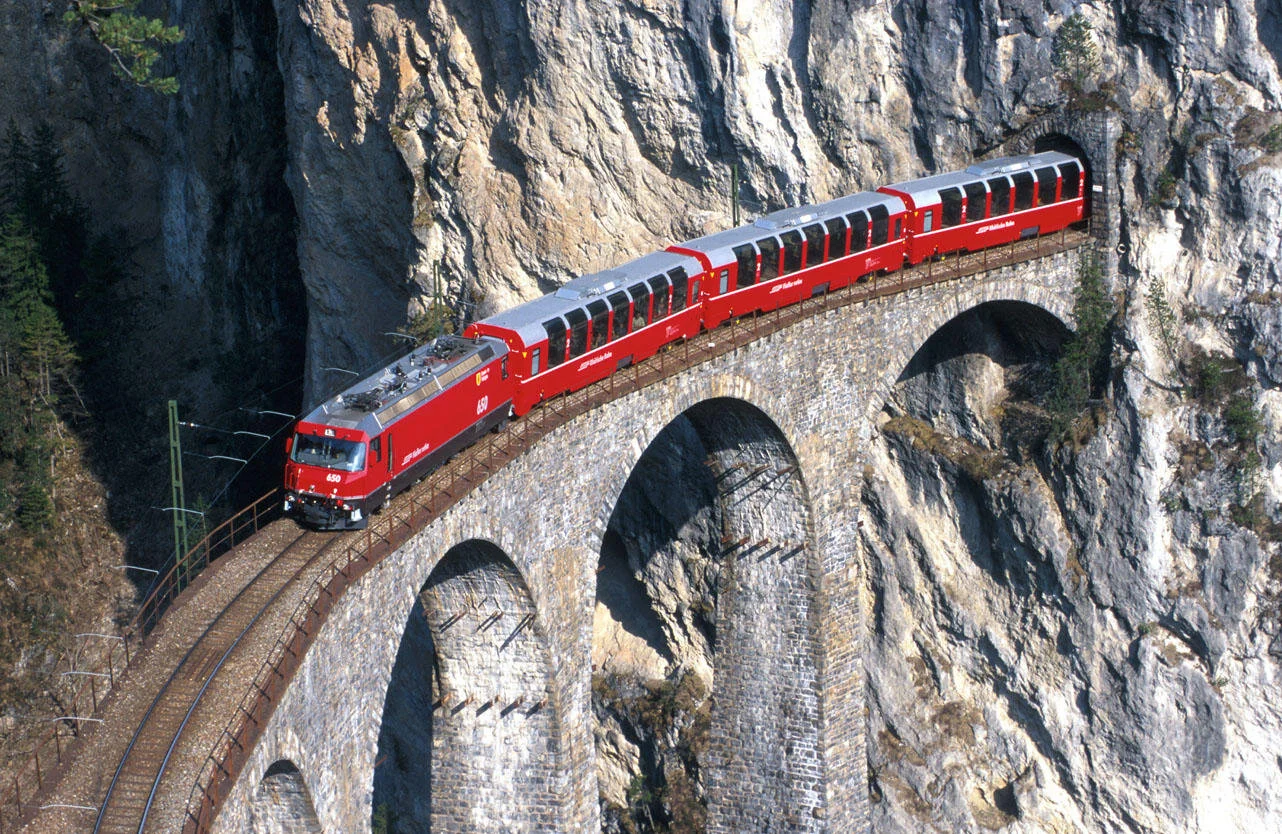
Oslo to Bergen on the Bergen Line, Zurich to Milan through the Gotthard Base Tunnel, the Glacier Express in Switzerland, and the Cinque Terre coastal line in Italy are the four most consistently recommended. Book these in daylight and sit on the scenic side where the operator indicates one.
What happens if my train is cancelled or delayed?
Under EU rail passenger rules, delays over 60 minutes entitle you to partial or full compensation, depending on the length of the delay. Keep your ticket and any receipts, and file the claim with the operator. Travel insurance covers additional losses like missed hotel nights.
Plan your trip: booking platforms we trust
I use these platforms because each one solves a specific part of a European rail trip. Operator sites are always the first stop for tickets. Kayak and Expedia handle flights when the train does not reach, which happens more often than rail enthusiasts admit. Booking.com, Agoda, and Hotels.com cover the city hotels you will need between train legs, and GetYourGuide handles the day tours and station transfers. TripAdvisor is where I check restaurant and hotel reviews before committing.
Kayak
Flight price comparison for legs the train does not cover.
Expedia
Flight and hotel packages for multi-city European trips.
Booking.com
General hotel search in every city on your route.
Agoda
Strong hotel inventory across Central and Eastern Europe.
Hotels.com
Loyalty rewards bookings for repeat European trips.
GetYourGuide
Tours and activities in each city along the route.
TripAdvisor
Reviews and restaurant finds before you arrive.
WakaAbuja does its best to keep all information accurate at the time of publishing. Prices, policies, and availability change regularly. Always verify with official sources before you travel. We are not liable for errors caused by outdated information. Travel insurance is strongly recommended.