Travel to Cartagena, Colombia: What to Know Before You Go
The best time to travel to Cartagena, Colombia is December through April, when the dry season brings sunny days, low humidity, and calm Caribbean water. US, UK, EU, Canadian, and Australian passport holders can enter Colombia visa-free for up to 90 days and must complete the free Check-Mig form online before arrival. A realistic daily budget runs US$80 to US$150 per person for mid-range hotels, meals, transport, and one paid attraction (confirm current rates on Booking.com). Three days is the minimum for a meaningful visit, and five days lets you add the Rosario Islands and a day trip without cutting the Walled City short.
I have been to Cartagena three times, in three different seasons, and every trip has taught me something the tourist brochures do not mention. The city is hotter than most first-timers expect, the streets in the Walled City are more crowded in the late afternoon than at midday, and the best meals are rarely in the restaurants with the biggest signs.
This guide exists to close the gaps I found in every other Cartagena guide I read before my first trip. It covers the practical details that actually shape a visit: which neighborhood to book, how much things cost, how to get around, what to avoid, and what a realistic three-day itinerary looks like when you factor in heat, crowds, and afternoon thunderstorms.
Jump to: Key Takeaways | Visa and Entry | Best Time to Visit | Where to Stay | Top Things to Do | Sample Itinerary | Getting Around | What It Costs | Safety | Mistakes to Avoid | FAQ
Key takeaways
- US, UK, EU, Canadian, and Australian passport holders can enter Colombia visa-free for up to 90 days and must complete the free Check-Mig form online before arrival.
- The dry season runs December through April, with the best combination of sunshine, low humidity, and calm sea for the Rosario Islands.
- Cartagena is hot year-round, with daytime temperatures between 28 and 33 degrees Celsius and high humidity. Plan outdoor activities for early morning and late afternoon.
- A mid-range daily budget runs US$80 to US$150 per person, including a boutique hotel in the Walled City, meals, transport, and one paid attraction (confirm current rates on Booking.com).
- The Walled City is walkable, but the cobblestone streets are uneven and the heat makes walking long distances harder than expected. Wear supportive shoes.
- The Rosario Islands are worth a full day. Book a tour that includes lunch and snorkeling for around US$60 to US$100 per person (check current rates on GetYourGuide).
- Uber works in Cartagena, but taxis are more common and cheaper for short trips within the city. A ride across the city costs about 10,000 to 15,000 Colombian pesos, roughly US$2.50 to US$4 (confirm current fares with your driver before departing).
- The Walled City and Getsemaní are both UNESCO-recognized for their colonial architecture and are safe for tourists during the day, with common-sense precautions at night.
Do you need a visa to travel to Cartagena, Colombia?
Most Western passport holders do not need a visa for Colombia. US, UK, EU, Canadian, and Australian citizens can stay up to 90 days visa-free for tourism. The passport must be valid for at least six months beyond your planned arrival date.
You must complete the Check-Mig form, Colombia’s official immigration form, online before departure. The form is free and can be filled out up to 24 hours before travel. Airlines at check-in will ask for the confirmation email. I have watched travelers miss flights because they did not know about this requirement, so complete it before you leave for the airport.
Colombian immigration is generally smooth at Cartagena’s Rafael Núñez International Airport, but queues can be long during peak season, December through April. Arrive with the Check-Mig email ready on your phone.
If you are traveling on a passport not covered above, check the current visa requirements on the WakaAbuja visa guide and the official Colombian Ministry of Foreign Affairs site.
When is the best time to visit Cartagena?
The best time to visit Cartagena is December through April. This is the dry season, with sunny days, low humidity, and calm sea conditions for the Rosario Islands. Temperatures range from 26 to 32 degrees Celsius, and rain is minimal.
The rainy season runs May through November, with the heaviest rain in October. Rain in Cartagena rarely lasts all day, but afternoon thunderstorms can disrupt plans. The advantage of the rainy season is lower hotel rates and fewer crowds, particularly in May, June, September, and November.
December through January is the most expensive window because it overlaps with Colombian holidays and Northern Hemisphere winter travel. Book hotels and Rosario Islands tours at least three months ahead if you plan to travel then.
Best months by priority
- Best weather: January, February, March, April.
- Best for budget: May, June, September, November.
- Best for festivals: November, for the Cartagena Independence celebrations.
- Worst weather: October, heaviest rainfall.
Seasonal notes
- December to January: Peak season, highest prices, book ahead.
- February to April: Excellent weather, slightly lower prices than December.
- May to November: Rainy season, but mornings are usually dry.
- October: Wettest month, but hotel prices drop significantly.
Maya Whitfield’s honest take: “I visited in October once to save money and got what I paid for. The rain was heavy but short, and I still had a good trip. But if you are coming for the Rosario Islands or long beach days, pay the premium and visit between December and April. The weather difference is not subtle.”
Which neighborhood should you stay in when visiting Cartagena?
Cartagena’s neighborhoods have distinct personalities, and the right choice depends on whether you want colonial charm, modern comfort, or a quieter base. The Walled City is the postcard version of Cartagena. Getsemaní is the creative, bohemian version. Bocagrande is the modern high-rise strip. Each serves a different kind of traveler.
Walled City (Centro Histórico)
- Best for: First-time visitors who want to walk everywhere.
- Vibe: Colonial architecture, boutique hotels, upscale restaurants.
- Downside: Higher prices, more crowded, noise at night in some streets.
Getsemaní
- Best for: Travelers who want a more local, creative atmosphere.
- Vibe: Street art, cafes, hostels, and restaurants with personality.
- Downside: Livelier and noisier at night, especially around Plaza de la Trinidad.
Bocagrande
- Best for: Families and travelers who want modern hotels with beach access.
- Vibe: High-rise hotels, chain restaurants, and a long beachfront walk.
- Downside: Lacks the colonial charm, feels generic compared to the Walled City.
Worth considering: Manga and Castillo Grande
- Manga: Quieter residential neighborhood, good for longer stays, walkable to Getsemaní.
- Castillo Grande: Between Bocagrande and the historic center, good value mid-range hotels.
Hotel prices in the Walled City vary widely. Boutique hotels with rooftop pools run US$120 to US$250 per night. Smaller guesthouses run US$60 to US$100. Bocagrande hotels run US$80 to US$180 for international chains, often with beach access included (confirm current rates on Booking.com).
What are the top things to do in Cartagena?
Cartagena’s attractions fall into three groups: the historic center for architecture and museums, the islands for beaches and snorkeling, and the outer neighborhoods for food and local culture. You can cover the highlights in three full days without feeling rushed.
Walk the Walled City at golden hour.
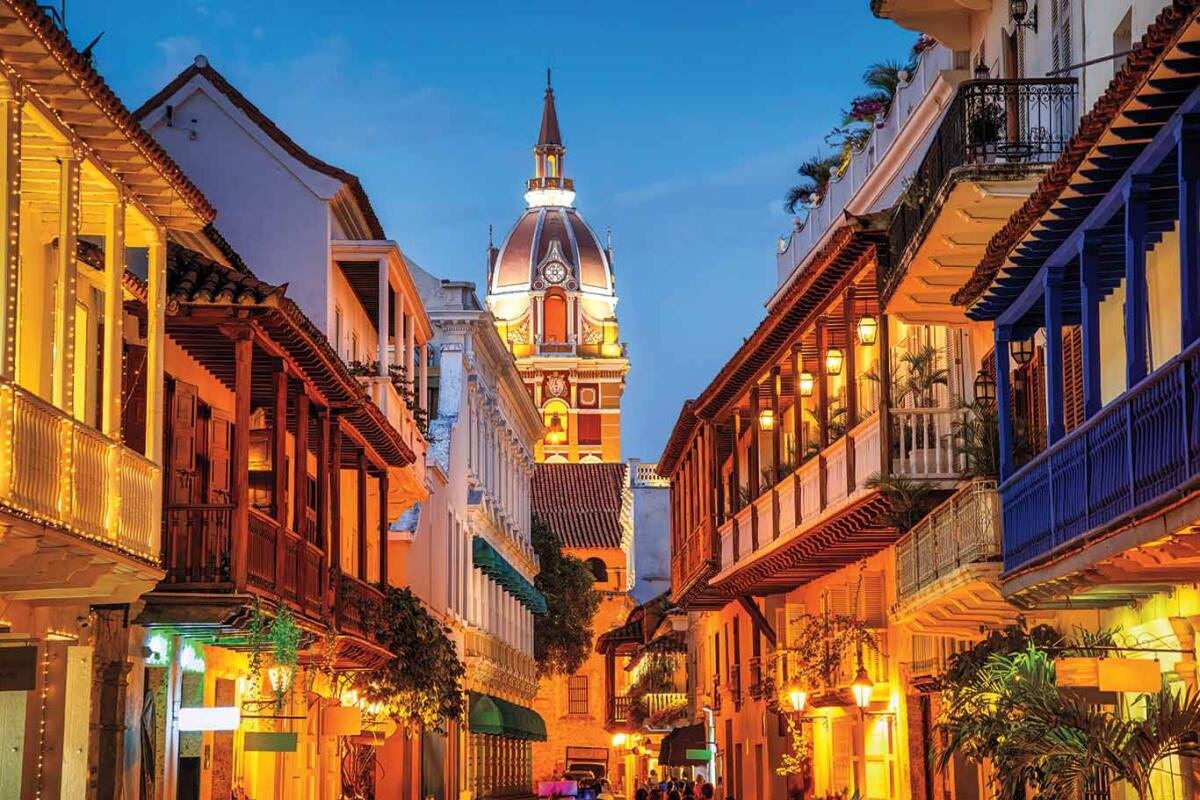
The Walled City is a UNESCO World Heritage site, originally built in the 16th century to defend against pirates. The best time to walk is late afternoon, when the sun is lower and the balconies of the colonial houses glow in warm light. Start at the Torre del Reloj, walk through Plaza de los Coches, and wander toward Plaza San Pedro Claver. There is no ticket and no schedule. Bring water and go slowly.
Visit Castillo San Felipe de Barajas.
Castillo San Felipe is the largest Spanish military fortification in the Americas and a UNESCO World Heritage site. Entry costs about 30,000 Colombian pesos, roughly US$7.50 (confirm current prices on the official site). Go in the morning before the heat builds. The tunnels are worth exploring, but they are narrow and dark, so bring a phone light.
Spend a day in the Rosario Islands.
The Rosario Islands are a national park about an hour by boat from Cartagena. Day tours run US$60 to US$100 per person and usually include lunch, snorkeling, and beach time (check current rates on GetYourGuide). The water is clearer than anything near the city, and the reefs are healthy. Choose a tour that limits group size, since large tours can be crowded and rushed.
Explore Getsemaní street art.
Getsemaní has become Cartagena’s creative heart. The streets between Plaza de la Trinidad and the old city wall are covered in murals that tell the neighborhood’s history and its gentrification story. Walk on your own or book a street art tour with a local guide. Plaza de la Trinidad is the social center of the neighborhood, especially in the evening.
Eat arepas and ceviche at local spots.
Cartagena’s food scene is one of the best in Colombia. Arepas de huevo, ceviche, and fried fish are the staples. The best ceviche I have had in Cartagena was at a small stand near the Mercado de Bazurto, the city’s main market. The market is chaotic and not for everyone, but it is the most authentic food experience in the city.
Take a day trip to Volcán del Totumo.
The Volcán del Totumo is a mud volcano about an hour from Cartagena. You climb down into the crater and float in warm mud. The experience is touristy but unique. Tours run about US$40 to US$60 per person, including transport (check current rates on GetYourGuide). Book through a reputable operator and confirm that the tour includes a shower afterward.
Must-do
- Walled City walk: free, best at golden hour.
- Castillo San Felipe: 30,000 pesos, go early.
- Rosario Islands tour: full day, book ahead.
- Getsemaní street art: free, walk it yourself or with a guide.
Worth adding
- Volcán del Totumo: mud volcano, half-day tour.
- Mercado de Bazurto: chaotic but authentic food market.
- Convento de la Popa: hilltop monastery with city views.
What does a 3-day Cartagena itinerary look like?
Three days is the minimum for a first visit to Cartagena. This itinerary balances the historic center, the islands, and the local neighborhoods without overloading any single day. It accounts for heat, crowds, and the fact that most travelers arrive tired.
Day 1: Walled City and Castillo San Felipe
Start with a morning walk through the Walled City before the heat and crowds build. Visit the Torre del Reloj, Plaza de los Coches, and Plaza San Pedro Claver. Have lunch at a local restaurant in the center. In the afternoon, visit Castillo San Felipe, ideally by 3 PM when the light softens. Dinner in Getsemaní at a restaurant near Plaza de la Trinidad. This is the classic first day.
Day 2: Rosario Islands
Book a full-day tour to the Rosario Islands with pickup from your hotel around 8 AM. Most tours include snorkeling, lunch, and beach time on one of the islands. Return to Cartagena by late afternoon. Dinner in the Walled City at a rooftop restaurant, ideally one with a view of the cathedral dome.
Day 3: Getsemaní and Volcán del Totumo (or a slower day)
If you have energy, take a half-day tour to the Volcán del Totumo in the morning. If not, walk Getsemaní’s street art, visit the Mercado de Bazurto, and have a long lunch. In the afternoon, shop for handicrafts at the Portal de los Dulces or the shops around Plaza Santo Domingo. Dinner at a local seafood restaurant. This is the day to slow down and enjoy what you have already seen.
Maya Whitfield’s honest take: “Most travelers try to fit the Walled City, Rosario Islands, Volcán del Totumo, and Getsemaní into three days, then leave exhausted. Pick two of those four and do them well. Cartagena rewards a slower pace.”
How do you get around Cartagena?
Cartagena’s historic center is walkable, but the city as a whole is spread out. The Walled City, Getsemaní, and Bocagrande are connected by a short taxi ride or a 30-minute walk, but the heat makes walking between neighborhoods harder than it looks on a map.
Uber works in Cartagena and is generally reliable, though some drivers cancel on short trips. Taxis are more common and cheaper for short rides. A ride within the Walled City costs about 10,000 to 15,000 pesos, roughly US$2.50 to US$4 (confirm current fares with your driver before departing). Always agree on the fare before getting in, since metered taxis are rare.
From Rafael Núñez International Airport to the Walled City, the drive is about 15 minutes. Official taxis from the airport cost around 25,000 to 35,000 pesos, roughly US$6 to US$9 (confirm current rates at the official taxi desk inside the terminal). Uber pickup at the airport is limited, so use the official taxi line.
For day trips to the Rosario Islands or Volcán del Totumo, book tours with transport included. Driving yourself is not worth the hassle.
What does a trip to Cartagena actually cost?
Cartagena is not cheap by Colombian standards but it is very affordable by Western ones. A mid-range traveler spends US$80 to US$150 per person per day including a boutique hotel in the Walled City, meals, transport, and one paid attraction. Budget travelers can manage US$40 to US$70. Luxury travelers at high-end hotels will spend US$250 or more per day.
Budget tier (hostels, local food)
- Daily: US$40 to US$70 per person (confirm current rates with your booking platform).
- Lodging: Hostels or simple guesthouses, US$15 to US$35 per night.
- Food: Local restaurants and street food, US$15 to US$25 per day.
- Transport: Walking and taxis, US$3 to US$6 per day.
Mid-range tier (boutique hotels, mix of dining)
- Daily: US$80 to US$150 per person (confirm current rates on Booking.com).
- Lodging: Boutique hotels in the Walled City, US$60 to US$120 per night.
- Food: Mix of local and mid-tier restaurants, US$25 to US$45 per day.
- Attractions: One paid attraction or tour per day, US$15 to US$30.
Luxury tier (5-star hotels, fine dining)
- Daily: US$200 to US$400 per person (confirm current rates with the hotel directly).
- Lodging: 5-star hotels and boutique luxury properties, US$180 to US$350 per night.
- Food: Fine dining and hotel restaurants, US$60 to US$120 per day.
- Transport: Private transfers and taxis, US$15 to US$30 per day.
Airfare from Europe or North America runs US$400 to US$900 round trip depending on season and origin city (check current fares on Kayak).
Is Cartagena safe for tourists?
Cartagena is one of the safer cities in Colombia for tourists, and the Walled City and Getsemaní are heavily policed during the day and early evening. Violent crime against tourists is rare, though petty theft and pickpocketing are a real risk in crowded areas, especially around the Torre del Reloj and Plaza de la Trinidad at night.
The main safety concerns for travelers are petty theft, overpriced taxis from the airport, and street vendors who are more persistent than in other cities. Do not carry your passport or large amounts of cash. Use hotel safes. Keep your phone out of sight when walking at night.
The neighborhoods outside the tourist areas, particularly some parts of the south and the outskirts, have higher crime rates and are not recommended for tourists, especially at night. Ask your hotel for advice on which areas to avoid, and stick to the Walled City, Getsemaní, Bocagrande, and Manga after dark.
The US State Department currently classifies Colombia as Level 3 (Reconsider Travel), though Cartagena itself is generally considered safer than other regions of the country. Check the State Department page and your own country’s travel advisory before booking.
What mistakes do first-time visitors make in Cartagena?
I have made most of these mistakes so you do not have to. Here are the ones that actually cost money or eat time.
Underestimating the heat and humidity
Cartagena is hot and humid year-round, and the Walled City’s narrow streets trap the heat. Walking for more than 30 minutes in the middle of the day is exhausting, even for fit travelers. Plan your sightseeing for early morning and late afternoon and use the middle of the day for lunch, museums, or pool time.
Not completing the Check-Mig form
Colombia requires all arriving travelers to complete the Check-Mig form online before departure. Airlines at check-in will ask for the confirmation email. I have seen travelers turned away at check-in because they did not know about this. Complete it 24 hours before your flight.
Booking a Bocagrande hotel thinking it is the historic center
Bocagrande is a modern high-rise neighborhood with beach access, but it is a 30-minute walk or a short taxi from the Walled City. If you want to walk everywhere and feel the colonial atmosphere, book in the Walled City or Getsemaní. Bocagrande is better for families and travelers who prioritize a beach view.
Paying the first price a street vendor quotes
Cartagena vendors often open with a price two or three times what they will accept. Politely negotiate. For handicrafts, starting at 40 to 50 percent of the quoted price is not rude. For taxis, agree on the fare before getting in.
Skipping the Rosario Islands because of the cost
The Rosario Islands are the best day trip from Cartagena and one of the few places where the water is clear enough for good snorkeling. A full-day tour costs US$60 to US$100 per person (check current rates on GetYourGuide), which is worth skipping two dinners in the Walled City to afford.
Not bringing enough cash
Many local restaurants, taxis, and market stalls operate on cash. ATMs in the Walled City are limited and sometimes run out of money. Withdraw more Colombian pesos than you think you need at the airport, and use credit cards only at hotels and larger restaurants.
Assuming the Walled City is the whole city
Getsemaní, Manga, and the Mercado de Bazurto are where Cartagena actually lives. Travelers who spend all their time inside the wall miss the creative energy that makes the city interesting. Give yourself a day to explore outside the historic center.
Frequently asked questions
Do I need a visa to travel to Cartagena, Colombia?
US, UK, EU, Canadian, and Australian passport holders can enter Colombia visa-free for up to 90 days for tourism. All travelers must complete the free Check-Mig form online before departure. The passport must be valid for at least six months beyond your planned arrival date .
How many days do you need in Cartagena?
Three days is the minimum for a first visit, covering the Walled City, Castillo San Felipe, Getsemaní, and a Rosario Islands day trip. Five days lets you add Volcán del Totumo and a slower exploration of local neighborhoods without rushing.
Is Cartagena safe for tourists?
Cartagena is one of the safer cities in Colombia for tourists, especially in the Walled City, Getsemaní, and Bocagrande. Petty theft and pickpocketing are real risks in crowded areas, and you should avoid the outskirts at night. Check your country’s travel advisory before booking.
When is the best time to visit Cartagena?
December through April is the best time, offering dry weather, sunny days, and calm sea conditions. October is the wettest month and best avoided unless you want the lowest hotel prices. Book three months ahead for December and January travel.
How much does a trip to Cartagena cost per day?
A mid-range traveler spends US$80 to US$150 per person per day including a boutique hotel in the Walled City, meals, transport, and one paid attraction. Budget travelers can manage US$40 to US$70 with hostels and local food. Luxury travelers at 5-star hotels should budget US$200 to US$400 per day (confirm current rates with your booking platform).
Is tap water safe to drink in Cartagena?
Tap water in Cartagena is treated but not recommended for foreign visitors, due to differing bacterial profiles. Most hotels and restaurants serve filtered or bottled water. Use bottled water for drinking and brushing your teeth to avoid stomach issues during your trip.
What is the dress code for nicer restaurants in Cartagena?
Cartagena is generally casual, but upscale restaurants in the Walled City expect smart-casual dress. For men, that means long trousers and a collared shirt, no shorts or flip-flops. For women, a sundress or smart trousers works. The heat means you should prioritize breathable fabrics over formal structure.
Do you need to speak Spanish to visit Cartagena?
Spanish helps but is not essential in tourist areas. Hotels, upscale restaurants, and tour operators in the Walled City and Getsemaní usually have English-speaking staff. Outside those areas, English is less common. Learn basic phrases like hola, gracias, and cuanto cuesta to make interactions easier.
Plan your trip: booking platforms we trust
I use these platforms myself and recommend them because they consistently surface the best rates or the most useful comparison tools for a Cartagena trip. None of them pay me to say that.
Booking.com
Best for Cartagena boutique hotels and guesthouses in the Walled City.
Kayak
Compare international flight prices to Cartagena Rafael Núñez Airport.
GetYourGuide
Book Rosario Islands tours, Volcán del Totumo, and city walking tours.
Agoda
Useful for stopover hotels if you are connecting through Bogotá.
Expedia
Bundle flights and hotels for package pricing.
TripAdvisor
Reviews and restaurant recommendations in the Walled City and Getsemaní.
WakaAbuja does its best to keep all information accurate at the time of publishing. Prices, policies, and availability change regularly. Always verify with official sources before you travel. We are not liable for errors caused by outdated information. Travel insurance is strongly recommended.