advertisement
Scenic Road Trips in the USA: 25 Routes Sorted by How Many Days You Have
The best scenic road trip in the USA depends on how many days you have. With three to four days, drive the Blue Ridge Parkway or the Oregon Coast. With a week, do the Going-to-the-Sun Road in Glacier combined with the Beartooth Highway or the Utah National Parks Loop. With two weeks or more, the Pacific Coast Highway from San Francisco to San Diego and a full Route 66 crossing are the two classics worth planning around. Budget roughly $150 to $250 per person per day for fuel, lodging, and food on a US road trip (confirm current regional prices before you commit).
Most “best road trips” lists hand you 25 roads and leave you to figure out the logistics yourself. I have driven stretches of the Pacific Coast Highway, the Blue Ridge Parkway, and a long, dusty section of Route 66 in Arizona, and the thing that always decides a trip is not the scenery.
It is how many days you actually have. So this list is sorted the way you will actually plan it, with mileage, season, and real costs filled in for each route.
Jump to: Quick Reference | Pick Your Trip Shape | Short Trips | Week-Long Trips | Cross-Country | East vs West | FAQ
Key takeaways
- The single most useful planning variable is trip length. Sort by days first, then by region, then by season.
- Going-to-the-Sun Road in Glacier National Park is typically open from late June or early July through mid-October (check current opening dates with the National Park Service).
- The Pacific Coast Highway from San Francisco to San Diego is roughly 500 miles and works best over five to seven days.
- Route 66 runs about 2,400 miles from Chicago to Santa Monica and needs at least two weeks to do properly.
- Blue Ridge Parkway is 469 miles, free to drive, and best in late September through early November for foliage.
- Budget roughly $150 to $250 per person per day in the US for fuel, lodging, and food combined (confirm current regional prices before booking).
- Cell signal dead zones are real on almost every route on this list. Download offline maps before each driving day.
Which scenic road trip fits your schedule? Quick reference
Scan this before you commit to anything. The mileage and day counts are realistic, not optimistic, and the “best season” column reflects when the road is actually open and comfortable, not just pretty.
3 to 4 days
- Blue Ridge Parkway, 469 miles, best in fall
- Oregon Coast Highway 101, 360 miles, best May to September
- Utah Scenic Byway 12, 124 miles, best from April to October
5 to 7 days
- Pacific Coast Highway, SF to San Diego, 500 miles
- Going to the Sun and Beartooth, 300 miles
- Grand Canyon to Zion corridor, 450 miles
2 weeks or more
- Route 66, Chicago to Santa Monica, 2,400 miles
- Full Pacific Coast Highway, Seattle to San Diego, 1,300 miles
- Blue Ridge to Great Smoky Mountains loop, 800 miles
How do you pick a road trip based on how much time you have?
Trip shape is the honest filter most lists ignore. A weekend and a two-week sabbatical are not the same trip with different lengths. They are different trips entirely, and the roads that work for one rarely work for the other.
My rule is simple. Count your available days, subtract one for arrival and one for departure, and then divide the remaining days by your maximum comfortable driving hours. If you have five days and you can handle four hours of driving per day, you can plan a trip with roughly 16 hours of wheel time. That is a real trip, not a sprint.
Then pick a region. East coast trips are shorter, denser, and better in fall. West coast trips are longer, emptier, and better in late spring and early fall when the heat and the crowds ease. The two are not interchangeable, and crossing between them eats days you could spend driving.
Maya’s honest take: “I have planned trips around a road I wanted to drive and trips around the time I had. The time-first trips were better every single time. The road you love is not worth it if you spend the whole drive watching the clock.”
Best scenic road trips for 3 to 4 days
Short trips need short roads. Anything over 500 miles in three days becomes a transit exercise rather than a scenic drive, and you will remember the driving, not the scenery.
Blue Ridge Parkway, Virginia and North Carolina
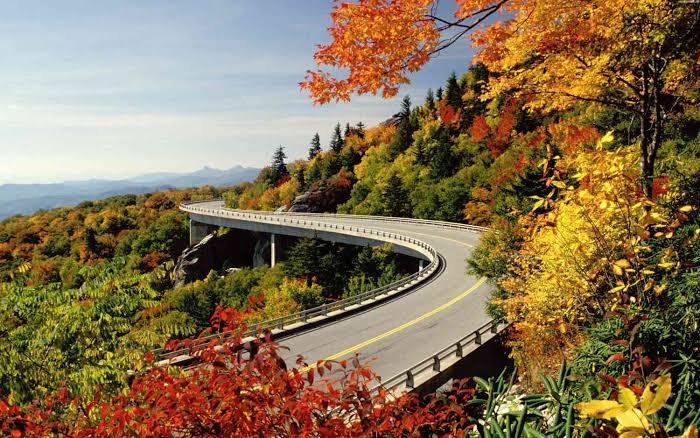
The Blue Ridge Parkway runs 469 miles from Shenandoah National Park in Virginia to Great Smoky Mountains National Park in North Carolina. It is free to drive, has no commercial traffic, and is one of the most consistently beautiful roads in the country. For a three-day trip, pick a 150- to 200-mile section, ideally around Asheville or Boone.
Best season: Late September through early November for foliage. Spring is good for wildflowers, but some sections open late.
Cost note: Free to drive. Lodging along the parkway runs $120 to $250 per night (confirm current rates before booking).
Timing caveat: Sections of the parkway close for weather, rockfalls, and maintenance. Check the National Park Service site before you leave.
Oregon Coast Highway 101
Highway 101 along the Oregon coast runs about 360 miles from Astoria to Brookings and delivers sea stacks, lighthouses, and small towns the whole way. Three days is enough to do the northern half properly. Four days covers the whole coast without rushing.
Best season: May through September. Winter brings rain and occasional slide closures.
Cost note: Lodging runs $110 to $220 per night in coastal towns (check current rates on Booking.com). Many state park campgrounds run $25 to $40 per night (confirm current park fees).
Timing caveat: Fog is common in summer mornings. Plan scenic stops for the afternoon.
Utah Scenic Byway 12
Byway 12 runs 124 miles between Bryce Canyon and Capitol Reef, and it is the most concentrated stretch of red rock scenery in the country. Three days gives you time for Bryce, Escalante, and Capitol Reef without rushing any of them.
Best season: April through October. Summer is hot and busy, but the high elevation keeps it manageable.
Cost note: National park entry is roughly $35 per vehicle per park (confirm current fees with the National Park Service). Lodging in the gateway towns runs $130 to $260 per night (check current rates).
Timing caveat: Summer afternoon thunderstorms are common. Drive the high passes in the morning.
Best scenic road trips for 5 to 7 days
A week is the sweet spot for a serious road trip. You can cover 500 to 900 miles without feeling like you are living in the car, and you can actually stop at the places that made you want to go.
Pacific Coast Highway, San Francisco to San Diego
The Pacific Coast Highway, also called Highway 1, runs roughly 500 miles from San Francisco to San Diego. Five days is the minimum. Seven days lets you actually stop in Monterey, Big Sur, San Luis Obispo, Santa Barbara, and the stretch through Malibu without skipping anything.
Best season: September through November for clear skies and fewer crowds. Spring is good, but the marine layer can sit for days.
Cost note: Lodging along the route is the biggest expense, running $180 to $400 per night in Big Sur and Santa Barbara (confirm current rates on Booking.com). Fuel and food run another $80 to $120 per person per day.
Timing caveat: Landslides close sections of Highway 1 regularly, especially in winter and spring. Check Caltrans road conditions before you drive.
Going-to-the-Sun Road and Beartooth Highway, Montana
The Going-to-the-Sun Road crosses Glacier National Park for 50 miles, and the Beartooth Highway runs from Red Lodge, Montana, to the northeast entrance of Yellowstone. Together they form the best mountain driving loop in the lower 48. A week is enough to do both without rushing, especially if you add a day or two in Yellowstone.
Best season: Late June or early July through mid-October. Going-to-the-Sun Road typically does not fully open until late June or early July (check current opening dates with the National Park Service).
Cost note: Glacier entry is roughly $35 per vehicle (confirm current fees). Lodging inside the parks sells out months ahead, and gateway towns run $150 to $300 per night (check current rates).
Timing caveat: Snow can close the Beartooth Highway even in early summer. Check road status daily.
Grand Canyon to Zion corridor, Arizona and Utah
This corridor runs about 450 miles from the Grand Canyon South Rim through Page, Arizona, and on to Zion National Park in Utah. Five to seven days lets you add Antelope Canyon, Lake Powell, and Bryce Canyon without turning the trip into a checklist.
Best season: April through May and September through October. Summer is hot at the lower elevations and crowded at every stop.
Cost note: National park entry runs roughly $35 per vehicle per park (confirm current fees). Lodging in Springdale, Page, and Tusayan runs $150 to $300 per night (check current rates).
Timing caveat: Timed-entry reservations are required at some parks in peak season. Book those before you book lodging.
Best cross-country scenic road trips for two weeks or more
These are the trips that justify the phrase once in a lifetime. They also require more planning than any other category on this list, because the logistics compound over distance.
Route 66, Chicago to Santa Monica
Route 66 runs about 2,400 miles from Chicago to Santa Monica, and it is the most famous road trip in the world. Two weeks is the minimum to do it properly. Three weeks lets you stop in the towns that make the route worth driving, rather than just passing through them.
Best season: April through May and September through October. Summer is brutally hot across the Oklahoma and Arizona sections.
Cost note: Lodging along the route averages $100 to $200 per night in the smaller towns (check current rates on Booking.com). Fuel and food run $70 to $110 per person per day.
Timing caveat: Long stretches of the original road are gone, replaced by I-40 and I-44. Bring a good paper map or offline navigation, because signage is inconsistent.
Full Pacific Coast Highway, Seattle to San Diego
The full PCH runs about 1,300 miles from Seattle to San Diego, including the Olympic Peninsula and the Oregon and California coasts. Two weeks is the realistic minimum. Three weeks is better, especially if you want to spend real time in the redwoods and Big Sur.
Best season: Late spring through early fall. Winter brings rain and closures in the Pacific Northwest.
Cost note: Lodging is the dominant expense, running $150 to $350 per night across the route (confirm current rates). Camping in state and national parks can cut this significantly, at roughly $30 to $50 per night (check current park fees).
Timing caveat: Ferry schedules in Washington and Oregon can add hours. Plan around them rather than through them.
Blue Ridge Parkway to Great Smoky Mountains loop
This loop runs about 800 miles from Shenandoah National Park through the Blue Ridge Parkway and into Great Smoky Mountains National Park. Two weeks lets you hike, stop at the overlooks, and spend real time in Asheville, Boone, and Gatlinburg.
Best season: Late September through early November for foliage. Spring is good but can be wet.
Cost note: The parkway is free. Great Smoky Mountains National Park requires a parking tag, roughly $5 per day or $15 per week (confirm current fees with the National Park Service). Lodging runs $120 to $250 per night (check current rates).
Timing caveat: Foliage season brings heavy traffic on the parkway. Start driving early in the day.
East Coast or West Coast: which scenic road trip is right for you?
This is the question that decides more trips than any other, and the honest answer is that the two coasts reward different kinds of travelers.
East Coast
- Shorter drives between stops
- More towns, more food, more history
- Best in fall for foliage
- Denser traffic in summer
West Coast
- Longer stretches of open road
- Bigger scenery, bigger distances
- Best in late spring and early fall
- Fewer services between stops
The number that matters most: on the East Coast, you can realistically cover 300 to 400 miles per day and still stop. On the West Coast, plan on 250 to 350 miles per day, because services are further apart and the drives themselves are slower. That difference adds up over a week, and it is the reason a “similar mileage” trip on the two coasts takes very different amounts of time.
What should you know before you book a US scenic road trip?
Book the rental car before anything else
Airport rental counters are the worst value in travel. Book early, book a specific class, and check whether your credit card or existing policy already covers the damage waiver. A one-week midsize rental typically runs $350 to $700 depending on season and pickup city (verify current quotes on Kayak or Expedia).
Check road closures the day you drive
Mountain passes close for snow, coastal roads close for slides, and desert roads close for flash floods. Check the state transportation department site and the National Park Service page for your route on the morning of each driving day. This has saved me two full days of backtracking.
Download offline maps before every remote stretch
Cell service is unreliable on nearly every route on this list. Download the region you are driving through before you leave the last town with signal.
Build in one buffer day per week
Something always slips. A buffer day turns a ruined trip into a minor inconvenience, and it costs you almost nothing if nothing goes wrong.
Buy travel insurance that covers road trips
Breakdowns, medical issues, and cancellations far from home add up quickly. Our guide to travel insurance for travelers covers the basics. If you are crossing into Canada or Mexico, check whether your policy extends across the border.
Do not over-plan the middle days
Book the first night and the last night and any high-demand stop. Leave the middle flexible so you can absorb weather, road closures, and the unexpected town you actually want to spend an extra night in.
Frequently asked questions
What is the best scenic road trip in the USA?
The Pacific Coast Highway from San Francisco to San Diego is the most consistently recommended scenic road trip in the USA. It runs about 500 miles and works best over five to seven days. For a shorter trip, the Blue Ridge Parkway and Utah Scenic Byway 12 are the strongest picks.
How much does a scenic road trip in the USA cost?
Budget roughly $150 to $250 per person per day for fuel, lodging, and food combined (confirm current regional prices before booking). Lodging is the largest expense, running $100 to $350 per night depending on the region and season. Camping can cut costs significantly, at roughly $25 to $50 per night in state and national parks (check current park fees).
What is the best scenic road trip for families?
The Blue Ridge Parkway and the Oregon Coast Highway 101 are the two best family road trips. Both have short driving days between stops, plenty of easy hikes and viewpoints, and towns with restaurants and services. Avoid Route 66 with young kids unless you plan short driving days.
When does Going-to-the-Sun Road open in Glacier National Park?
Going-to-the-Sun Road typically opens fully in late June or early July and closes for the season in mid-October. Opening dates depend on snowpack and plowing progress, so check the National Park Service site before you book. The road can close temporarily for snow even in summer.
Do I need a national parks pass for a US road trip?
If your route passes through three or more national parks, the America the Beautiful annual pass is worth it. It costs roughly $80 per year (confirm current pricing on the National Park Service site) and covers entry to more than 2,000 federal recreation sites. Individual park entry is usually around $35 per vehicle.
What is the cheapest scenic road trip in the USA?
The Blue Ridge Parkway is the cheapest major scenic road trip because the road itself is free and camping along the route is inexpensive. The Utah national parks loop is also good value if you camp, though park entry fees add up. Camping instead of hotels cuts the daily cost roughly in half.
How far should I drive per day on a US road trip?
Aim for 250 to 350 miles per day, which translates to roughly four to six hours of actual driving. On the East Coast you can push to 400 miles per day and still stop. On the West Coast, plan on 250 to 350 miles because services are further apart and the drives are slower.
Plan your trip: booking platforms we trust
I use these platforms because each one fits a specific part of a US road trip. Flights and rental cars get compared on Kayak and Expedia. Lodging along the route gets booked on Booking.com, and family or group trips go through Vrbo. Timed activities and tours get booked on GetYourGuide, and every operator gets a review check on TripAdvisor before I commit.
Kayak
Flight and rental car price comparison before you commit.
Expedia
Flight and hotel packages for one-way rental routes.
Booking.com
General hotel search along your route.
Vrbo
Family villas and vacation rentals for group road trips.
GetYourGuide
Tours and timed activities along the route.
TripAdvisor
Reviews and restaurant finds before you arrive.
WakaAbuja does its best to keep all information accurate at the time of publishing. Prices, policies, and availability change regularly. Always verify with official sources before you travel. We are not liable for errors caused by outdated information. Travel insurance is strongly recommended.